
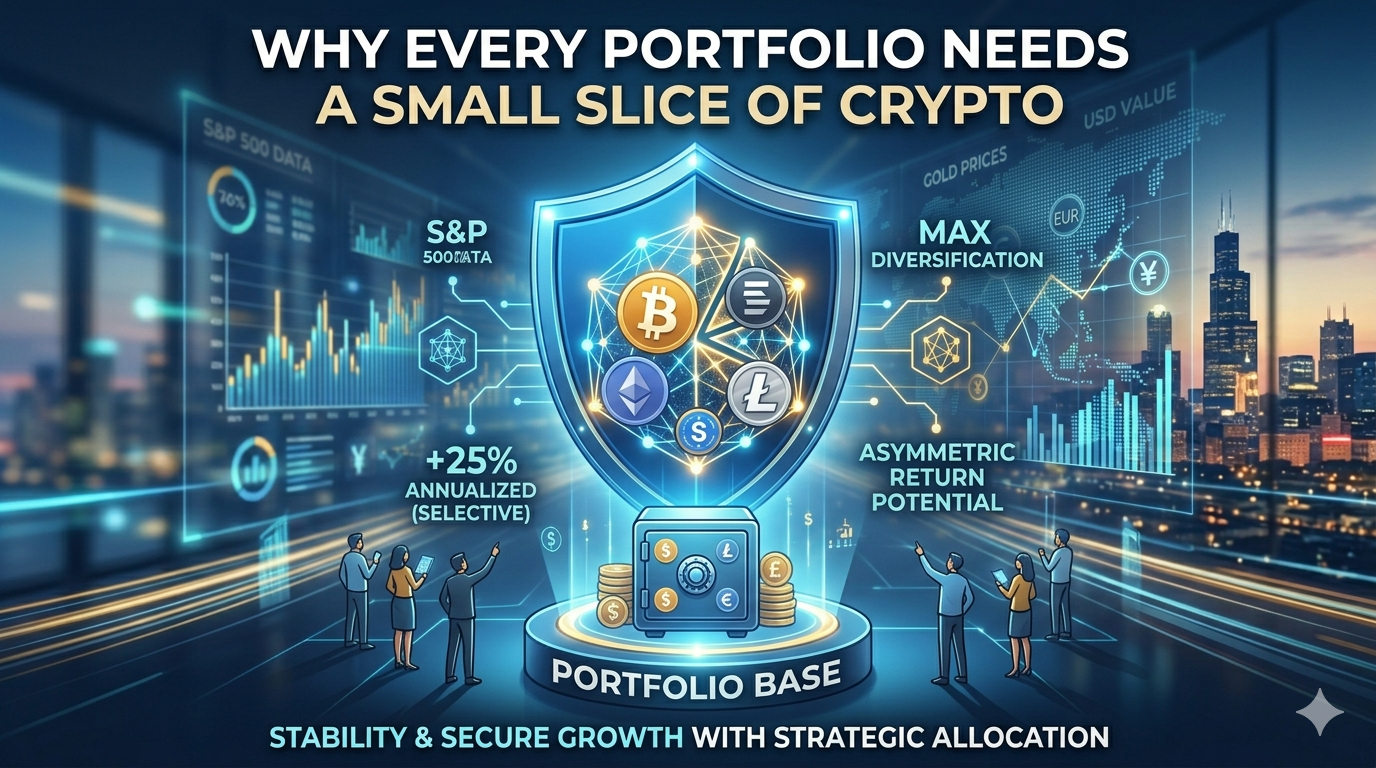
Let’s cut to the chase: if you’re serious about long-term wealth building, your investment portfolio likely needs a small slice of crypto. No, this isn’t about chasing the next meme coin or hoping for a 1000% moonshot. It’s about strategic diversification, inflation hedging, and exposure to a transformative asset class that’s here to stay. Even conservative investors are now allocating 1–5% of their portfolios to digital assets—and for good reason.
Cryptocurrencies like Bitcoin and Ethereum aren’t just speculative tools anymore. They’re increasingly recognized as legitimate stores of value and innovation engines. Adding a modest crypto allocation can reduce overall portfolio volatility, enhance returns over time, and future-proof your investments against traditional market shocks. The key isn’t going all-in—it’s going smart.
The Case for Crypto in a Balanced Portfolio
Traditional portfolios often rely on stocks, bonds, and real estate. While these remain foundational, they’re increasingly correlated during economic downturns. Crypto, by contrast, has shown periods of low or even negative correlation with equities—especially during times of financial stress.
This uncorrelated behavior makes crypto a powerful diversification tool. Think of it like adding an umbrella to your wardrobe: you don’t wear it every day, but when the storm hits, you’re glad it’s there. A small crypto position can act as a hedge against inflation, currency devaluation, and systemic banking risks.
Historical Performance Speaks Volumes
Over the past decade, Bitcoin has delivered annualized returns exceeding 200% in some years—far outpacing the S&P 500. While past performance doesn’t guarantee future results, it highlights crypto’s potential to boost portfolio growth when held as a long-term component.
Even during bear markets, top-tier cryptocurrencies have consistently rebounded stronger. Ethereum, for example, has evolved from a smart contract platform to a backbone of decentralized finance (DeFi), NFTs, and Web3 infrastructure—making it more than just a speculative asset.
How Much Crypto Should You Hold?
There’s no one-size-fits-all answer, but financial advisors increasingly recommend a “satellite” approach: keep the core of your portfolio in traditional assets, and allocate a smaller portion—typically 1% to 5%—to higher-growth, higher-risk opportunities like crypto.
This small slice allows you to benefit from upside potential without exposing your entire nest egg to volatility. It’s the investment equivalent of ordering a sampler platter: you get to taste the exotic without overcommitting.
- 1% allocation: Ideal for risk-averse investors seeking minimal exposure.
- 3% allocation: A balanced choice for moderate risk tolerance.
- 5% allocation: Suitable for growth-focused investors comfortable with volatility.
Beyond Bitcoin: Diversifying Within Crypto
While Bitcoin remains the most established cryptocurrency, limiting your crypto exposure to just one asset misses the bigger picture. The digital asset ecosystem includes thousands of projects across different sectors.
Consider spreading your crypto allocation across a few high-conviction assets:
- Bitcoin (BTC): Digital gold and the most liquid crypto.
- Ethereum (ETH): The leading platform for decentralized applications.
- Layer 1 alternatives: Like Solana (SOL) or Cardano (ADA), offering faster and cheaper transactions.
- Stablecoins: Such as USDC or DAI, for preserving value during market dips.
This internal diversification reduces single-point risk and captures innovation across the blockchain space.
Risk Management Is Non-Negotiable
Let’s be clear: crypto is volatile. Prices can swing 20% in a day. That’s why a small allocation is crucial—it lets you participate without jeopardizing financial stability.
Smart risk management includes:
- Using dollar-cost averaging (DCA) to buy consistently over time.
- Storing assets in secure wallets (hardware wallets for long-term holds).
- Avoiding leverage and emotional trading.
- Staying informed but not obsessing over daily price movements.
Remember, the goal isn’t to get rich quick—it’s to build resilient wealth over time.
Regulation and Institutional Adoption Are Growing
Skeptics often cite regulatory uncertainty as a reason to avoid crypto. But the tide is turning. Major financial institutions—BlackRock, Fidelity, and JPMorgan—are now offering crypto-related products. The U.S. SEC has approved Bitcoin ETFs, signaling growing legitimacy.
Regulatory clarity is improving globally, with countries like Switzerland, Singapore, and the UAE creating crypto-friendly frameworks. This institutional embrace reduces systemic risk and increases long-term confidence in digital assets.
Key Takeaways
- A small crypto allocation (1–5%) can enhance portfolio diversification and long-term returns.
- Cryptocurrencies often behave differently from traditional assets, offering hedging benefits.
- Diversify within crypto—don’t put all your digital eggs in one basket.
- Use disciplined strategies like DCA and secure storage to manage risk.
- Institutional adoption and regulation are making crypto more mainstream and safer.
FAQ
Is crypto too risky for conservative investors?
Not if allocated wisely. A 1–2% position limits downside while allowing participation in potential upside. Think of it as venture capital for your portfolio—small bet, big potential payoff.
Which crypto should I buy first?
Start with Bitcoin or Ethereum—they’re the most established and widely held. Once comfortable, consider adding one or two altcoins with strong use cases and active development teams.
How do I store my crypto safely?
Use a reputable hardware wallet like Ledger or Trezor for long-term storage. Avoid keeping large amounts on exchanges, which are vulnerable to hacks. Enable two-factor authentication (2FA) everywhere.
Adding a small slice of crypto to your portfolio isn’t about gambling—it’s about evolution. As the financial landscape shifts toward decentralization and digital innovation, staying entirely on the sidelines could mean missing out on one of the most significant wealth-building opportunities of our time. Start small, stay informed, and let time do the rest.
