
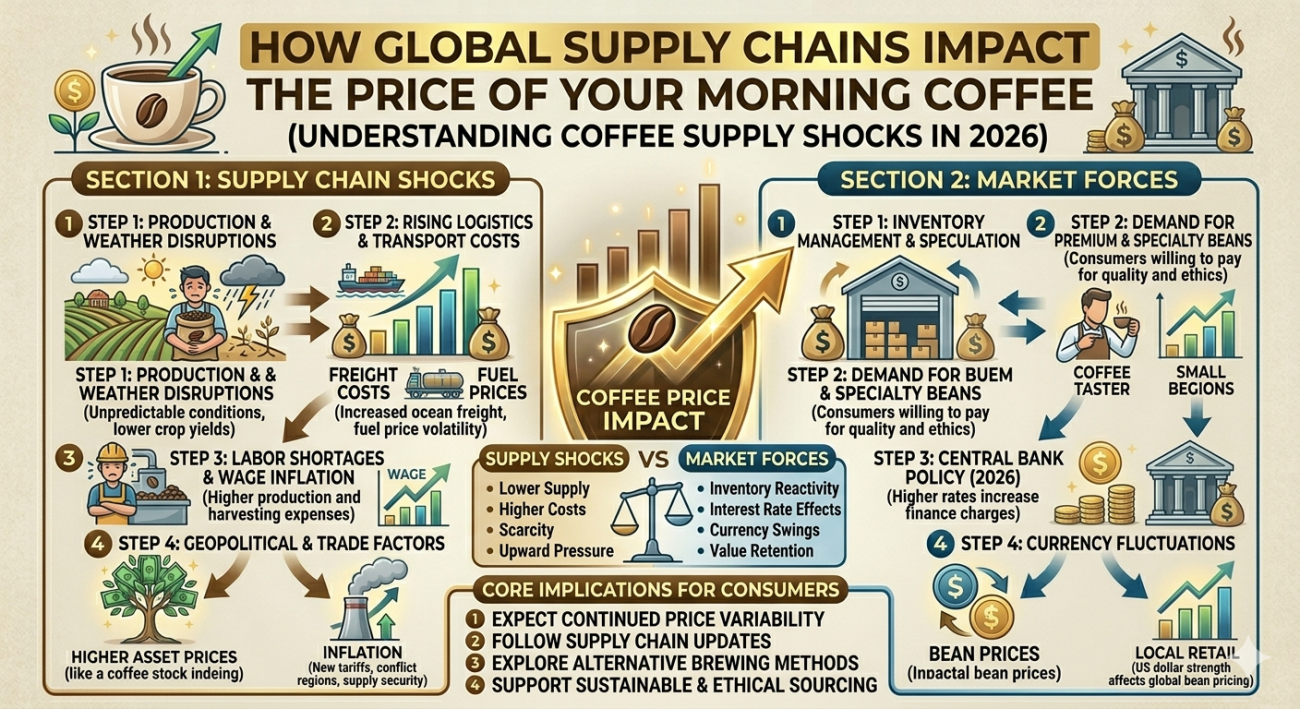
That first sip of coffee each morning might seem like a simple ritual, but the journey your beans take to reach your cup is anything but simple. How global supply chains impact the price of your morning coffee is a complex story involving climate, trade policies, shipping costs, and labor markets across continents. Every time you pay more—or less—at the checkout counter, you’re feeling the ripple effects of a vast, interconnected network that stretches from highland farms in Colombia to roasteries in Berlin and supermarkets in Tokyo.
The truth is, your daily cup is tied to global forces far beyond your local café. From bean to brew, coffee moves through a chain of producers, exporters, importers, roasters, and retailers—each adding cost, risk, and value. When disruptions occur anywhere along this chain—whether due to a storm in Brazil, a port strike in California, or a surge in fuel prices—the final price you pay reflects those shocks. Understanding this system helps explain why coffee prices fluctuate and what drives long-term trends in cost.
The Journey of a Coffee Bean: From Farm to Cup
Coffee begins its life on smallholder farms in tropical regions like Ethiopia, Vietnam, Honduras, and Indonesia. These farmers harvest cherries, process them into green beans, and sell them to local cooperatives or exporters. But getting those beans out of the country requires logistics, infrastructure, and coordination—all part of the global supply chain.
Once exported, green coffee beans travel by truck, rail, and container ship to consuming nations. In 2023, over 170 million bags of coffee were produced globally, with the majority shipped via maritime routes. Shipping delays, container shortages, or port congestion can significantly increase transit times and costs. For example, during the pandemic, freight rates skyrocketed by over 300%, directly affecting coffee import prices in North America and Europe.
Key Stages in the Coffee Supply Chain
- Production: Farmers grow and harvest coffee, often facing climate risks and volatile market prices.
- Processing & Export: Beans are dried, sorted, and shipped from origin countries.
- Import & Warehousing: Importers receive shipments and store beans until needed by roasters.
- Roasting & Distribution: Roasters transform green beans into aromatic coffee and distribute to retailers or cafes.
- Retail & Consumption: Consumers buy coffee in stores, online, or at cafes—final price influenced by all prior stages.
How Shipping and Logistics Drive Coffee Prices
One of the most direct ways global supply chains affect coffee prices is through transportation costs. Ocean freight accounts for a significant portion of the final cost, especially for beans traveling from Latin America to Asia or Europe. When fuel prices rise—as they did during the 2022 energy crisis—shipping becomes more expensive, and those costs are passed down the chain.
Container availability also plays a role. During peak demand periods or after geopolitical disruptions (like the Red Sea shipping crisis in early 2024), containers become scarce. This leads to higher freight rates and longer delivery times. Roasters may delay orders or pay premiums to secure stock, which ultimately increases retail prices.
Moreover, inland logistics matter. In countries with poor road infrastructure—such as parts of East Africa or Central America—getting coffee from remote farms to ports can be slow and costly. These inefficiencies reduce profit margins for farmers and increase costs for buyers, contributing to higher consumer prices.
Climate Change and Agricultural Volatility
Climate change is reshaping coffee production, and its effects ripple through global supply chains. Rising temperatures, unpredictable rainfall, and increased pests threaten yields in key growing regions. For instance, Brazil—the world’s largest coffee producer—experienced severe droughts in 2021, leading to a 20% drop in arabica production and a spike in global prices.
When harvests fail or are delayed, supply tightens. Importers scramble to find alternative sources, often paying higher premiums. Roasters may reformulate blends or reduce batch sizes to manage costs. These adjustments eventually reach consumers in the form of higher prices or smaller package sizes.
Additionally, climate-related risks increase insurance and financing costs for farmers and exporters. These added expenses are factored into the price of green coffee, further influencing the final retail cost. Sustainable farming practices and climate adaptation efforts can mitigate some risks, but they require investment—another cost that flows down the supply chain.
Trade Policies, Tariffs, and Currency Fluctuations
International trade rules and currency values also shape coffee prices. Tariffs, import duties, and trade agreements determine how easily coffee can move between countries. For example, the U.S.-China trade tensions in the late 2010s led to uncertainty in commodity markets, including coffee, as traders anticipated shifts in demand and supply.
Currency exchange rates are equally important. Most coffee is traded in U.S. dollars, so when the dollar strengthens, coffee becomes more expensive for buyers using weaker currencies. This can reduce demand in key markets like the Eurozone or Japan, forcing producers to lower prices or seek alternative buyers—often at a loss.
Conversely, when local currencies weaken, farmers in countries like Colombia or Vietnam receive less income for their beans, even if global prices remain stable. This can discourage investment in quality or sustainability, indirectly affecting long-term supply and pricing.
The Role of Speculation and Commodity Markets
Coffee is one of the most traded commodities in the world, and its price is influenced not just by physical supply and demand, but also by financial speculation. Traders on the Intercontinental Exchange (ICE) buy and sell coffee futures contracts, betting on future price movements based on weather forecasts, political events, or economic trends.
While speculation can help stabilize prices by providing liquidity, it can also amplify volatility. A sudden surge in futures trading—driven by rumors of a poor harvest or geopolitical tension—can push spot prices up rapidly, even if actual supply hasn’t changed. Roasters and retailers must respond quickly, often passing these increases to consumers.
This financial layer adds another dimension to how global supply chains impact coffee prices. It means that your morning brew isn’t just affected by farmers and ships—it’s also shaped by algorithms, hedge funds, and global market sentiment.
Labor Costs and Social Equity in the Supply Chain
Behind every coffee bean is human labor—from harvesting and processing to packaging and shipping. Labor costs vary widely across producing countries and are influenced by local wages, labor laws, and migration patterns. In regions where labor is scarce or wages are rising, production costs increase.
Fair trade and direct trade models aim to address these disparities by ensuring farmers receive better prices. However, these premiums also contribute to higher retail costs. While consumers may pay more for ethically sourced coffee, the extra cost reflects a more equitable distribution of value along the supply chain.
Moreover, labor shortages—due to urbanization or aging populations in rural areas—can delay harvests and reduce quality. This affects supply reliability and can lead to price spikes during peak seasons.
Retail Markups and Consumer Behavior
Even after coffee reaches its destination, the final price is shaped by retail strategies and consumer expectations. Specialty coffee shops often charge more due to higher-quality beans, skilled labor, and ambiance. Supermarkets may offer lower prices but rely on bulk purchasing and private-label brands to maintain margins.
Branding, packaging, and marketing also influence pricing. A bag of coffee with a compelling origin story or sustainable certification can command a premium, even if the base cost of beans is similar to a generic brand. These value-added elements are part of the broader supply chain economics.
Consumer demand for convenience—such as single-serve pods or ready-to-drink cold brew—adds another cost layer. These products require additional processing, packaging, and distribution, all of which contribute to higher prices compared to traditional ground coffee.
Key Takeaways
- The price of your morning coffee is directly influenced by global supply chain dynamics, including shipping, climate, trade, and labor.
- Disruptions anywhere in the chain—from farm to port to roastery—can lead to price increases at the retail level.
- Climate change, geopolitical events, and financial speculation add layers of volatility to coffee pricing.
- Ethical sourcing and sustainability efforts, while commendable, often result in higher consumer costs.
- Understanding the supply chain empowers consumers to make informed choices and appreciate the true value of their coffee.
FAQ
Why does coffee price fluctuate so much?
Coffee prices fluctuate due to a combination of factors including weather conditions in producing countries, shipping delays, currency exchange rates, and speculative trading on commodity markets. These elements are all part of the global supply chain that determines the final cost.
How do shipping delays affect the cost of coffee?
Shipping delays increase transportation costs and reduce the availability of coffee in importing countries. When containers are delayed or freight rates rise, importers and roasters pass these extra costs to retailers and, ultimately, consumers.
Can fair trade coffee really make a difference in pricing?
Yes. Fair trade certification ensures farmers receive a minimum price and social premium, which supports community development. However, these benefits come with higher production and certification costs, which are reflected in the retail price of fair trade coffee.
