Crypto scams are everywhere—and they’re getting smarter. From fake exchanges to fraudulent investment schemes, bad actors are constantly evolving their tactics to steal your digital assets. The good news? Most crypto scams leave behind clear warning signs. Learning how to spot a crypto scam before it’s too late can save you thousands—and your peace of mind.
This guide breaks down the red flags you should never ignore, the tools you can use to verify legitimacy, and the best practices to protect your crypto investments. Whether you’re a beginner or a seasoned trader, staying alert is your first line of defense.
Red Flags That Reveal a Crypto Scam
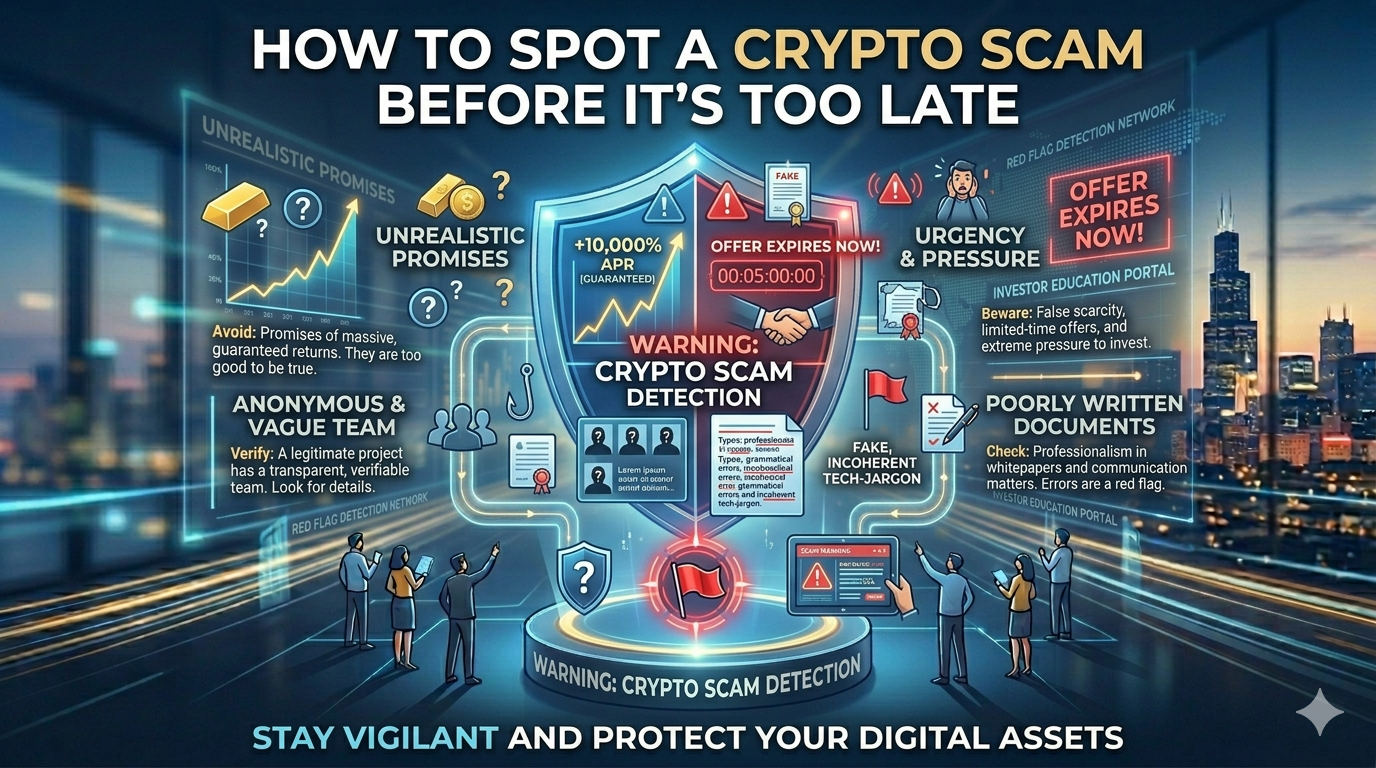
Scammers rely on urgency, greed, and misinformation. If something feels off, it probably is. Here are the most common warning signs that scream “crypto scam”:
- Too-good-to-be-true returns: Promises of guaranteed high profits with zero risk are a classic scam tactic. Legitimate investments always carry risk.
- Anonymous or unverified team: If the project’s developers are anonymous or can’t be found on LinkedIn or GitHub, proceed with extreme caution.
- Poor or copied whitepaper: A vague, plagiarized, or non-existent whitepaper is a major red flag. Real projects have detailed, original technical documentation.
- Pump-and-dump schemes: Sudden price spikes driven by coordinated social media hype—especially on Telegram or Twitter—often signal manipulation.
- Unsolicited offers: Messages from strangers promising insider tips, airdrops, or exclusive access to “secret” coins are almost always scams.
Fake Websites and Phishing Attacks
One of the most common ways scammers steal crypto is through fake websites that mimic legitimate platforms. These sites look nearly identical to trusted exchanges like Binance or Coinbase but are designed to steal your login credentials.
Always double-check the URL. Scammers often use slight misspellings (e.g., “Binancee.com” or “Coinbaase.com”) or subdomains that look official. Bookmark your real exchange sites and never click links from emails or DMs.
Enable two-factor authentication (2FA) using an authenticator app—not SMS—whenever possible. This adds a critical layer of security that most phishing attacks can’t bypass.
Social Media and Influencer Scams
Scammers frequently exploit social media platforms to promote fake tokens or impersonate well-known figures. You might see a tweet from a verified account promoting a “limited-time airdrop” or a YouTube video claiming Elon Musk endorsed a new coin.
Remember: legitimate projects don’t ask for private keys or upfront payments. If an influencer is pushing a coin with aggressive language like “GET IN NOW BEFORE IT EXPLODES,” it’s likely a scam.
Always verify announcements through official channels. Check the project’s official website, verified Twitter account, or GitHub repository—not third-party posts or comments.
Unregulated or Unlicensed Platforms
Not all crypto platforms are created equal. Some operate without regulatory oversight, making them prime targets for fraud. Before depositing funds, check if the exchange is registered with financial authorities like the SEC (U.S.), FCA (UK), or ASIC (Australia).
Use tools like CoinGecko or CoinMarketCap to research a platform’s reputation, trading volume, and user reviews. Low liquidity, negative feedback, or sudden changes in leadership are warning signs.
Avoid platforms that pressure you to deposit quickly or offer bonuses for referrals. These are hallmarks of Ponzi-style schemes.
Fake Wallets and Malicious Apps
Downloading the wrong wallet app can result in instant loss of funds. Scammers create fake versions of popular wallets like MetaMask or Trust Wallet on app stores, often with nearly identical logos and descriptions.
Always download wallets directly from the official website or trusted app stores. Check the developer name, number of downloads, and user ratings. If an app has few reviews or was recently published, it’s likely malicious.
Never enter your seed phrase into any app, website, or form. Legitimate wallets will never ask for it outside of initial setup.
How to Verify a Crypto Project’s Legitimacy
Before investing, do your own research (DYOR). Start with these steps:
- Read the project’s whitepaper thoroughly. Does it explain the technology, use case, and roadmap clearly?
- Check the team’s background on LinkedIn. Are they experienced in blockchain or fintech?
- Review the code on GitHub. Is it actively maintained with regular commits?
- Look for third-party audits from firms like CertiK or Hacken. Audited smart contracts are safer.
- Join the project’s official community on Discord or Telegram. Are admins responsive and transparent?
If any of these elements are missing or suspicious, walk away.
Key Takeaways
- Always question promises of high returns with no risk—this is the #1 sign of a crypto scam.
- Verify URLs, team identities, and project documentation before investing.
- Use official sources and enable 2FA to protect your accounts.
- Never share your private keys or seed phrases with anyone.
- Stay skeptical of social media hype and unsolicited offers.
FAQ: Common Questions About Crypto Scams
Can you get your money back from a crypto scam?
Unfortunately, recovering funds from a crypto scam is extremely difficult. Transactions on the blockchain are irreversible, and scammers often move funds through mixers or decentralized exchanges. Report the scam to local authorities and your platform, but don’t expect a refund.
How do scammers get my wallet address?
Scammers can see your public wallet address if you’ve used it in transactions or shared it online. They use this info to send phishing messages or fake airdrops. Never share your address publicly unless necessary, and always verify the sender.
Are all new crypto projects scams?
No. Many legitimate projects launch every year. The key is due diligence. Research the team, technology, and community. If it checks out, it may be worth considering—but never invest more than you can afford to lose.
Staying safe in crypto isn’t about fear—it’s about awareness. By learning how to spot a crypto scam before it’s too late, you protect your assets and contribute to a healthier ecosystem. Stay informed, stay cautious, and always think twice before clicking.
