
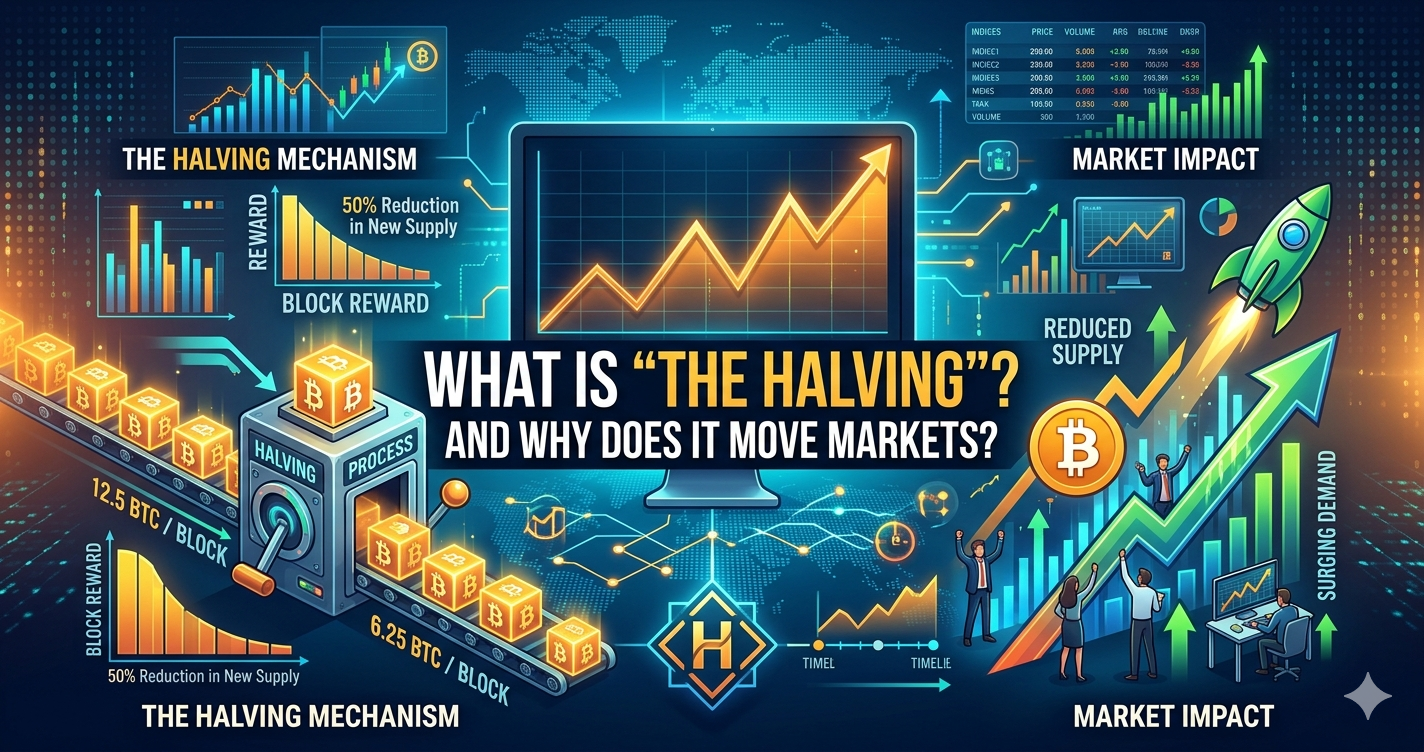
If you’ve been following cryptocurrency news, especially around Bitcoin, you’ve likely heard the term “The Halving”—a pivotal event that ripples through digital asset markets every four years. But what exactly is it, and why does it send shockwaves across trading floors, investor portfolios, and media headlines? Simply put, The Halving is a programmed reduction in the reward miners receive for validating new blocks on the Bitcoin blockchain. This built-in scarcity mechanism directly impacts Bitcoin’s supply rate, and history shows it consistently influences market behavior.
How Does The Halving Work?
The Bitcoin network is designed with a hard cap of 21 million coins, and new Bitcoins enter circulation through a process called mining. Miners use powerful computers to solve complex mathematical problems, securing the network and adding new transaction blocks. As a reward, they receive newly minted Bitcoins—but only until the next Halving event.
Approximately every 210,000 blocks—roughly every four years—the reward given to miners is cut in half. This event, hardcoded into Bitcoin’s protocol by its anonymous creator, Satoshi Nakamoto, ensures controlled and predictable issuance. For example:
- 2009–2012: 50 BTC per block
- 2012–2016: 25 BTC per block
- 2016–2020: 12.5 BTC per block
- 2020–2024: 6.25 BTC per block
- 2024 onward: 3.125 BTC per block
This deflationary model contrasts sharply with traditional fiat currencies, which central banks can print at will. The Halving enforces scarcity, making Bitcoin increasingly rare over time.
Why Does The Halving Move Markets?
Markets are driven by supply and demand. The Halving directly reduces the rate at which new Bitcoins are created, effectively slowing supply growth. When supply growth slows and demand remains steady or increases, prices tend to rise—this is basic economics in action.
Historically, each Halving has been followed by a significant bull run. After the 2012 Halving, Bitcoin surged from around $12 to over $1,000 within a year. The 2016 Halving saw prices climb from ~$650 to nearly $20,000 by late 2017. The 2020 Halving preceded the 2021 bull market, where Bitcoin peaked above $68,000.
While past performance doesn’t guarantee future results, the pattern is hard to ignore. Investors anticipate reduced supply, leading to increased buying pressure in the months leading up to and following the event. This speculative behavior amplifies volatility and often triggers broader crypto market rallies.
Market Psychology and Anticipation
Beyond raw supply dynamics, The Halving fuels market psychology. Traders and institutions often front-run the event, buying Bitcoin in expectation of a price surge. Media coverage intensifies, drawing in retail investors and increasing overall market participation.
This anticipation creates a self-fulfilling prophecy: the more people believe the Halving will boost prices, the more they buy, which in turn drives prices higher. Social media buzz, analyst predictions, and institutional adoption (like ETFs) further amplify momentum.
Beyond Price: Long-Term Implications
The Halving isn’t just about short-term price spikes. It reinforces Bitcoin’s value proposition as “digital gold”—a decentralized, scarce asset resistant to inflation. As mining rewards shrink, transaction fees are expected to become a larger portion of miner income, ensuring network security remains sustainable.
For miners, The Halving is a double-edged sword. While reduced rewards squeeze profitability, a rising Bitcoin price can offset lower issuance. Efficient miners with access to cheap electricity often survive and even thrive post-Halving, while less competitive operations may shut down.
This natural selection strengthens the network over time, favoring resilience and decentralization. It also highlights Bitcoin’s deflationary design, which appeals to investors seeking protection against currency devaluation.
Key Takeaways
- The Halving is a pre-programmed event that cuts Bitcoin mining rewards in half every four years.
- It reduces the rate of new Bitcoin supply, increasing scarcity and potentially driving up prices.
- Historical data shows strong market rallies following each Halving, though outcomes vary.
- Market psychology, media attention, and investor speculation amplify the event’s impact.
- Long-term, The Halving supports Bitcoin’s role as a deflationary, store-of-value asset.
FAQ
When is the next Bitcoin Halving?
The most recent Bitcoin Halving occurred in April 2024, reducing block rewards from 6.25 to 3.125 BTC. The next Halving is expected around 2028, continuing the four-year cycle.
Does the Halving guarantee a price increase?
No. While historical trends suggest a positive correlation between Halvings and price rallies, many factors influence Bitcoin’s value—including regulation, macroeconomic conditions, and adoption rates. The Halving is one variable among many.
How does the Halving affect Bitcoin miners?
Miners face immediate revenue cuts, which can force less efficient operations offline. However, if Bitcoin’s price rises significantly post-Halving, mining can remain profitable. Over time, the network adapts through improved efficiency and fee-based incentives.
The Halving remains one of the most anticipated events in the cryptocurrency calendar. It’s not just a technical adjustment—it’s a fundamental pillar of Bitcoin’s economic model, shaping investor behavior, market cycles, and long-term valuation. Whether you’re a trader, holder, or observer, understanding The Halving is essential to navigating the evolving landscape of digital assets.
