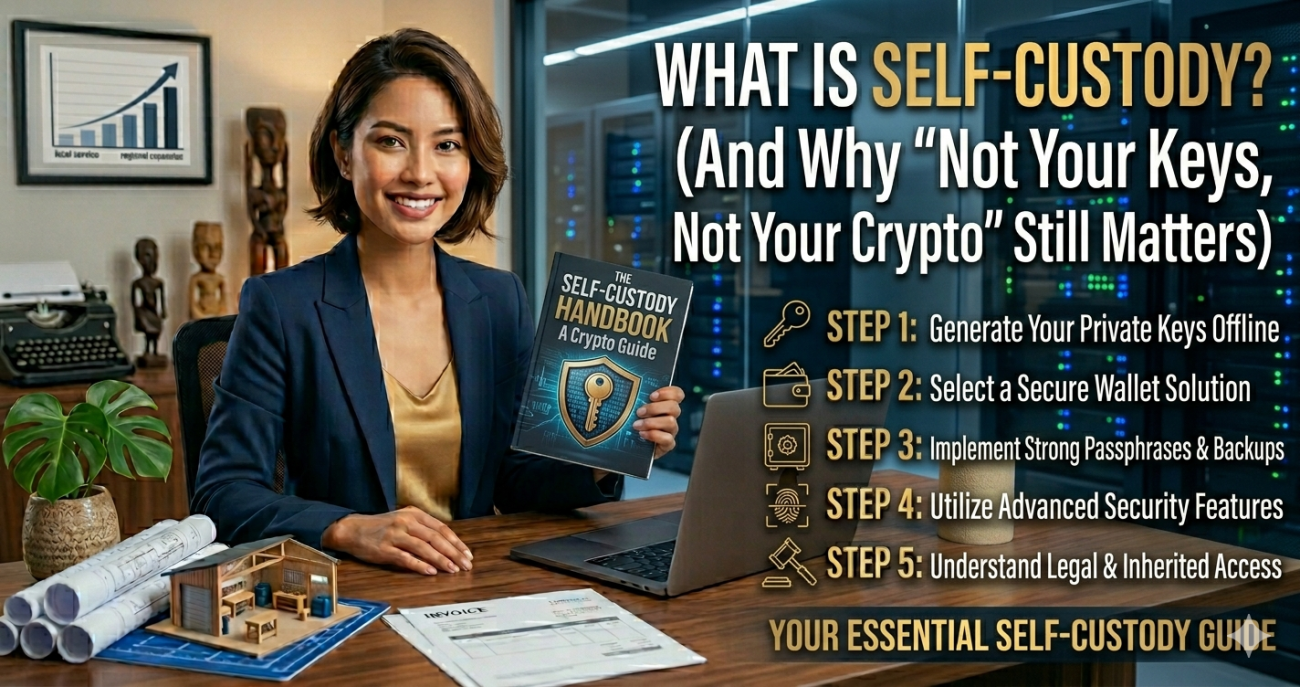
Self-custody means you—and only you—control the private keys to your cryptocurrency. Unlike keeping your funds on an exchange like Binance or Coinbase, self-custody puts full ownership and responsibility in your hands. This is where the famous crypto mantra comes in: “Not your keys, not your crypto.” If someone else holds your private keys, they technically own your assets—not you. In a world of exchange hacks, regulatory crackdowns, and sudden platform shutdowns, self-custody isn’t just a preference—it’s a necessity for true financial sovereignty.
The concept isn’t new, but its importance has only grown. As centralized platforms face increasing scrutiny and security breaches, more users are realizing that trusting third parties with digital assets is a risky gamble. Self-custody returns control to the individual, aligning with Bitcoin’s original vision of peer-to-peer electronic cash without intermediaries. Whether you’re holding Bitcoin, Ethereum, or any other digital asset, understanding self-custody is essential to protecting your wealth in the decentralized economy.
How Self-Custody Works: The Basics of Private Key Control
At the heart of self-custody lies the private key—a long, cryptographic string that proves ownership of your crypto. When you use a non-custodial wallet (like Ledger, Trezor, or MetaMask), you generate and store this key yourself. No company, bank, or platform has access to it. That means only you can sign transactions and move your funds.
Contrast this with custodial services, where exchanges manage your keys on your behalf. While convenient, this model reintroduces the very middlemen blockchain was designed to eliminate. If the exchange goes offline, gets hacked, or freezes your account, your crypto could be lost or inaccessible—even if it’s still technically “yours” on paper.
Self-custody wallets come in two main forms: hardware (cold storage) and software (hot wallets). Hardware wallets offer the highest security by keeping keys offline, while software wallets provide easier access for daily use. The best practice? Use a combination: cold storage for long-term holdings and a trusted hot wallet for smaller, active amounts.
Why “Not Your Keys, Not Your Crypto” Still Matters in 2024
The phrase “not your keys, not your crypto” was popularized by Bitcoin advocates to emphasize ownership. It’s more relevant today than ever. High-profile exchange collapses—like FTX in 2022—showed how quickly user funds can vanish when centralized entities fail. Thousands of users lost access to their assets not because of market crashes, but because they didn’t control their keys.
Regulatory pressure is another growing concern. Governments worldwide are tightening oversight on crypto platforms, sometimes freezing accounts or restricting withdrawals. When you rely on a third party, you’re subject to their rules, jurisdiction, and operational risks. Self-custody removes these variables. You’re no longer dependent on a company’s solvency, compliance team, or customer support.
Moreover, self-custody aligns with the core ethos of decentralization. Cryptocurrency was built to empower individuals, not institutions. By holding your own keys, you participate directly in the network—validating transactions, securing the blockchain, and maintaining true ownership. It’s not just about security; it’s about principle.
The Risks of Ignoring Self-Custody
Choosing convenience over control can have serious consequences. Here are the most common risks of leaving crypto on exchanges:
- Hacks and breaches: Centralized platforms are prime targets for cyberattacks. Over $3 billion was stolen from crypto exchanges in 2023 alone.
- Insolvency: If an exchange goes bankrupt, user funds may be treated as unsecured debt—meaning you could lose everything.
- Account freezes: Platforms can suspend withdrawals due to regulatory demands or internal policies, locking you out of your own money.
- Loss of privacy: Custodial services often require KYC verification, linking your identity to your wallet and transaction history.
These risks aren’t hypothetical. They’ve played out repeatedly across the industry. Self-custody is the only way to fully mitigate them.
How to Start Practicing Self-Custody Safely
Transitioning to self-custody doesn’t have to be overwhelming. Start small and build confidence over time. Begin by transferring a small amount of crypto to a reputable non-custodial wallet. Test sending and receiving transactions to ensure everything works as expected.
When choosing a wallet, prioritize security, transparency, and user control. Open-source wallets are generally more trustworthy because their code can be audited by the community. Avoid wallets that require you to share your seed phrase or private keys—legitimate ones will never ask for this.
Always back up your seed phrase—the 12- or 24-word recovery phrase—on durable, offline materials like metal plates or paper. Store backups in multiple secure locations (e.g., a safe and a trusted family member’s home). Never store your seed phrase digitally (no photos, cloud notes, or emails).
Best Practices for Secure Self-Custody
- Use a hardware wallet for large holdings: Devices like Ledger or Trezor keep keys offline and resistant to malware.
- Enable multi-signature setups: For added security, require multiple keys to authorize transactions—ideal for shared accounts or high-value wallets.
- Keep software updated: Wallet firmware and apps should always be current to patch vulnerabilities.
- Avoid public Wi-Fi for transactions: Use a secure, private network when accessing your wallet.
- Verify addresses carefully: Always double-check wallet addresses before sending funds—malware can alter clipboard data.
Remember: with self-custody comes responsibility. There’s no customer service to call if you lose your keys. But that’s also the point—you’re in full control.
The Future of Self-Custody: Trends and Innovations
As crypto adoption grows, so does the infrastructure supporting self-custody. New tools are making it easier, safer, and more user-friendly. Social recovery wallets, for example, allow users to regain access via trusted contacts if they lose their seed phrase—without compromising decentralization.
Smart contract wallets are another breakthrough. Platforms like Safe (formerly Gnosis Safe) enable programmable security features, such as spending limits, time locks, and multi-sig approvals. These wallets combine the flexibility of traditional banking with the security of self-custody.
Meanwhile, regulatory clarity is slowly improving. Some jurisdictions are beginning to recognize self-custody wallets as legitimate financial tools, not just speculative vehicles. This shift could encourage more mainstream users to take control of their assets.
Despite these advances, education remains the biggest hurdle. Many newcomers still don’t understand the difference between custodial and non-custodial setups. Clear, accessible resources—like this one—are critical to closing that gap.
Key Takeaways
- Self-custody means you control your private keys—and therefore your crypto.
- The phrase “not your keys, not your crypto” emphasizes that ownership requires key control.
- Centralized exchanges pose risks: hacks, insolvency, freezes, and loss of privacy.
- Self-custody aligns with crypto’s original vision of decentralization and individual sovereignty.
- Use hardware wallets for security, back up seed phrases offline, and never share private keys.
- Emerging technologies like social recovery and smart wallets are making self-custody more accessible.
FAQ
What happens if I lose my private keys or seed phrase?
If you lose your private keys or seed phrase, your crypto is permanently inaccessible. Unlike banks, there’s no password reset or customer support. This is why secure backup—using physical, offline methods—is absolutely critical.
Can I still use decentralized apps (dApps) with a self-custody wallet?
Yes! In fact, self-custody wallets like MetaMask are essential for interacting with dApps, DeFi platforms, and NFT marketplaces. They allow you to connect directly to blockchain networks without intermediaries.
Is self-custody only for advanced users?
Not at all. While it requires more responsibility than using an exchange, modern wallets are designed for everyday users. With proper education and precautions, anyone can safely practice self-custody—even beginners.
Self-custody isn’t just a technical choice—it’s a philosophical one. It’s about reclaiming control in a financial system increasingly shaped by centralized power. As the crypto landscape evolves, one truth remains: if you don’t hold your keys, you don’t truly own your crypto. And in an era of uncertainty, that ownership matters more than ever.
