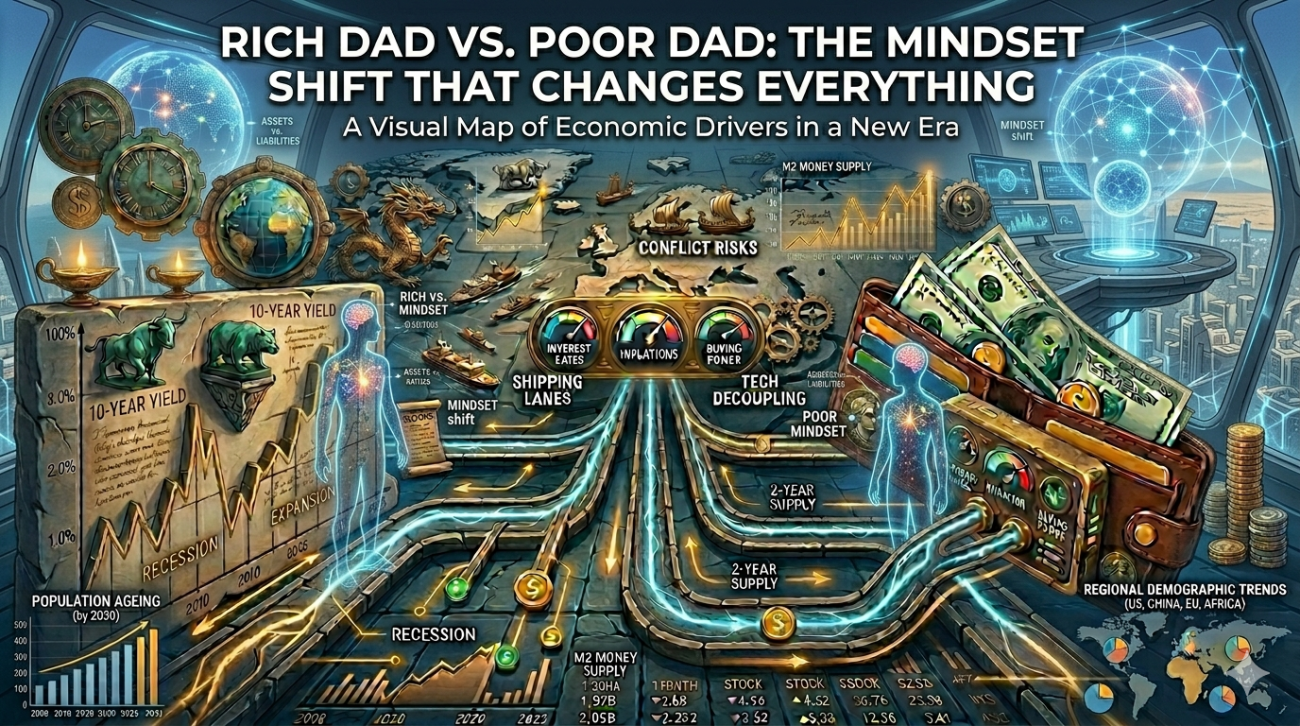
What if the biggest obstacle to your financial freedom isn’t your income—but your mindset? Rich Dad vs. Poor Dad: The Mindset Shift That Changes Everything isn’t just a catchy phrase—it’s the core lesson from Robert Kiyosaki’s groundbreaking book, Rich Dad Poor Dad. This mindset shift separates those who build lasting wealth from those who stay trapped in the paycheck-to-paycheck cycle. It’s not about how much you earn, but how you think about money, assets, and financial independence.
The Two Dads: Two Worldviews on Money
Kiyosaki’s story centers on two father figures: his biological “poor dad” (a highly educated government employee) and his best friend’s “rich dad” (a self-made entrepreneur). Though both men started with similar opportunities, their financial outcomes were drastically different—because of their mindsets.
The poor dad believed in working hard, getting good grades, and securing a stable job. The rich dad taught that financial education, risk-taking, and owning income-generating assets were the real keys to wealth. This contrast isn’t about intelligence—it’s about perspective.
Key Differences in Financial Thinking
- Poor Dad: “I can’t afford it.” → Focuses on limitations and scarcity.
- Rich Dad: “How can I afford it?” → Focuses on solutions and opportunities.
- Poor Dad: Values job security and steady income.
- Rich Dad: Values financial literacy and cash flow from assets.
- Poor Dad: Avoids debt at all costs.
- Rich Dad: Uses “good debt” to acquire assets that generate income.
The Asset vs. Liability Mindset
One of the most transformative ideas in Rich Dad Poor Dad is the distinction between assets and liabilities. Most people confuse the two—and that confusion keeps them poor.
An asset puts money in your pocket. Examples include rental properties, dividend-paying stocks, businesses, and intellectual property.
A liability takes money out of your pocket. A car, a luxury home with a mortgage, and credit card debt are classic examples—even if they feel like “investments.”
The rich dad mindset prioritizes acquiring assets that generate passive income. The poor dad mindset often leads to buying liabilities disguised as assets, trapping people in financial stress.
Financial Education: The Missing School Subject
Schools teach us to work for money, but rarely how to make money work for us. This gap in financial education is where the mindset shift begins.
The rich dad emphasized learning about:
- Accounting and cash flow
- Investing and market dynamics
- Understanding taxes and legal structures
- The power of entrepreneurship
These aren’t advanced topics—they’re foundational. Yet, most people never learn them. The result? A lifetime of trading time for money, instead of building systems that create wealth automatically.
Overcoming Fear and Taking Calculated Risks
Fear of failure and loss keeps most people in financial stagnation. The poor dad feared financial risk and stuck to the safety of a salary. The rich dad saw fear as a signal to learn and grow.
The mindset shift involves:
- Reframing failure as feedback
- Starting small with low-risk investments
- Building confidence through financial education
- Surrounding yourself with like-minded, growth-oriented people
Wealth isn’t built by avoiding risk—it’s built by managing it intelligently.
The Power of Passive Income and Financial Freedom
The ultimate goal of the rich dad mindset isn’t just money—it’s freedom. Freedom from the 9-to-5 grind, from debt, and from financial anxiety.
Passive income—money earned with little ongoing effort—is the engine of this freedom. Whether through real estate, online businesses, or dividend portfolios, passive income allows you to live life on your terms.
The poor dad mindset keeps you working to pay bills. The rich dad mindset builds systems that pay you, even while you sleep.
Key Takeaways: How to Start Your Mindset Shift Today
- Redefine wealth: Wealth isn’t your salary—it’s your net worth and cash flow.
- Focus on assets: Buy things that generate income, not just things that look impressive.
- Educate yourself: Read books, take courses, and learn from financially successful people.
- Challenge limiting beliefs: Replace “I can’t afford it” with “How can I make it happen?”
- Start small: Your first investment doesn’t have to be huge—just consistent and intentional.
FAQ: Common Questions About the Rich Dad Mindset
Is the rich dad mindset only for entrepreneurs?
No. While entrepreneurship is one path, the mindset applies to anyone—employees, freelancers, investors. It’s about how you think about money, not your job title.
Can I adopt this mindset later in life?
Absolutely. Financial transformation isn’t age-dependent. Many people begin their wealth-building journey in their 40s, 50s, or beyond—once they shift their thinking.
Does this mean I should quit my job?
Not immediately. The rich dad mindset encourages building income streams while employed. Once your passive income covers your expenses, you gain the freedom to choose your work—or not work at all.
The Rich Dad vs. Poor Dad: The Mindset Shift That Changes Everything isn’t about copying someone else’s path. It’s about rewiring your beliefs about money, risk, and success. When you change how you think, you change what you attract—and ultimately, the life you live.
