
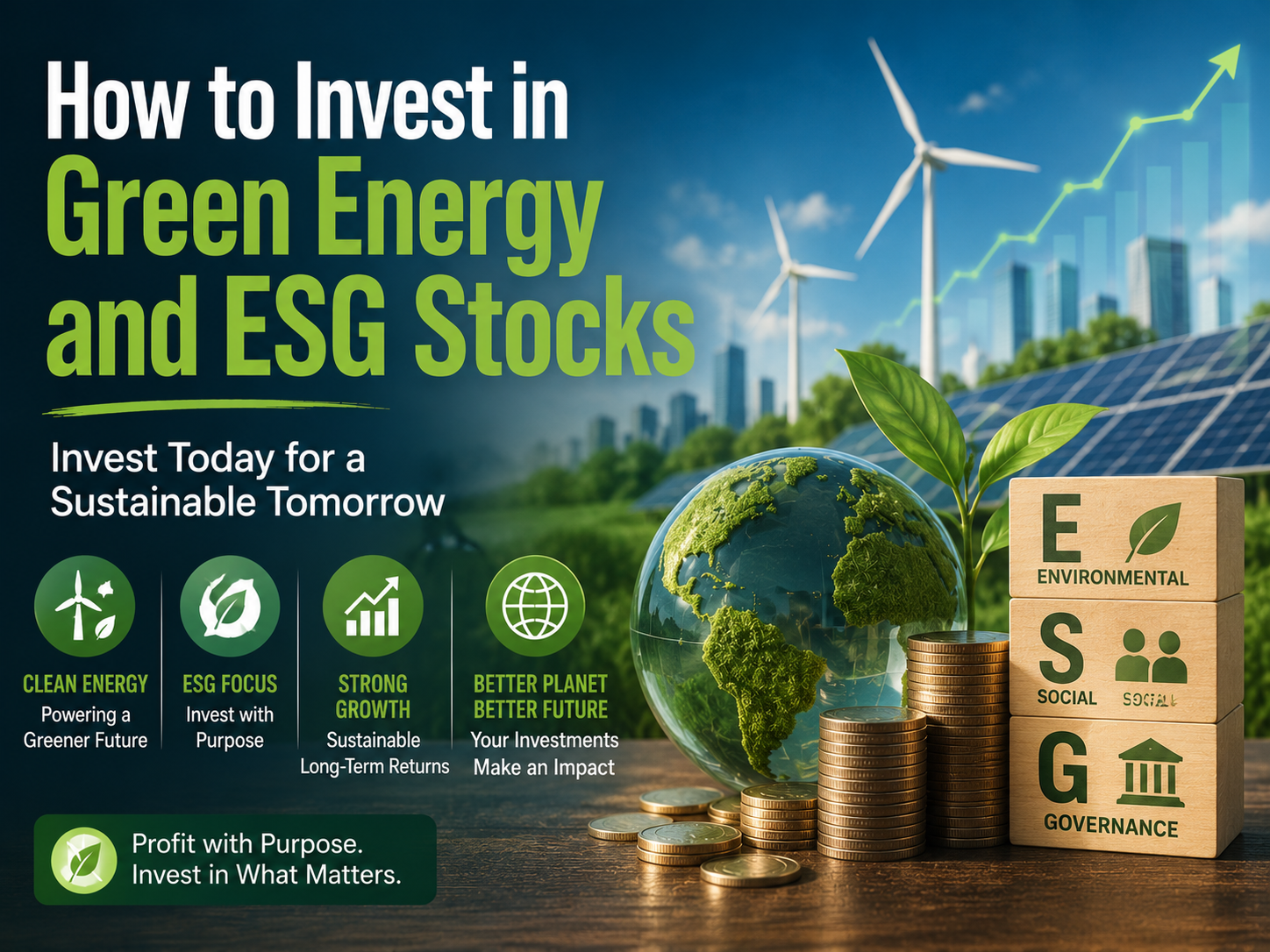
Looking to align your portfolio with sustainability while chasing solid returns? Investing in green energy and ESG stocks offers a powerful way to support environmental responsibility and ethical business practices—without sacrificing financial growth. As climate change accelerates and corporate accountability rises, these investments are no longer niche; they’re mainstream opportunities backed by global policy shifts, consumer demand, and long-term market trends.
Why Green Energy and ESG Stocks Are Gaining Momentum
Green energy and ESG (Environmental, Social, and Governance) stocks represent companies leading the charge in clean technology, renewable resources, and ethical operations. Governments worldwide are pushing net-zero targets, and corporations are responding by slashing emissions and adopting transparent governance. This creates fertile ground for investors seeking both impact and profit.
Key drivers include:
- Rising global investment in solar, wind, and battery storage technologies
- Stricter environmental regulations favoring low-carbon businesses
- Increased consumer and institutional demand for sustainable investments
- Long-term cost advantages of renewable energy over fossil fuels
Types of Green Energy and ESG Stocks to Consider
Not all ESG or green energy stocks are created equal. Diversifying across sectors helps manage risk while capturing growth across the sustainability spectrum.
Solar and Wind Energy Producers
Companies like NextEra Energy (NEE) and Ørsted (ORSTED) are leaders in utility-scale solar and offshore wind. These firms benefit from long-term power purchase agreements and government subsidies, offering stable cash flows and growth potential.
Battery and Energy Storage Innovators
As renewables expand, so does the need for efficient storage. Stocks such as Tesla (TSLA) and CATL (300750.SZ) are advancing lithium-ion and next-gen battery tech, crucial for grid stability and electric vehicle adoption.
Electric Vehicle (EV) Manufacturers and Suppliers
Beyond Tesla, companies like BYD (1211.HK) and NIO (NIO) are reshaping transportation. Suppliers of EV components—charging infrastructure, semiconductors, and rare earth materials—also offer indirect exposure to the green energy boom.
ESG-Leading Utilities and Infrastructure
Traditional energy firms transitioning to renewables, such as Enel (ENEL.MI) and Iberdrola (IBE.MC), score high on ESG metrics. Their scale and regulatory support make them resilient long-term holdings.
How to Evaluate ESG Stocks: Beyond the Label
Just because a stock is labeled “ESG” doesn’t guarantee it’s a good investment. Greenwashing—where companies exaggerate their sustainability efforts—is a real risk. Here’s how to dig deeper:
- Check third-party ESG ratings: Use platforms like MSCI, Sustainalytics, or Refinitiv to assess a company’s true environmental and social impact.
- Review carbon footprint and emissions targets: Look for science-based goals aligned with the Paris Agreement.
- Analyze governance practices: Strong boards, diversity, and anti-corruption policies signal long-term resilience.
- Assess financial health: High ESG scores mean little if the company is overleveraged or unprofitable.
Investment Vehicles: ETFs, Mutual Funds, and Direct Stocks
You don’t need to pick individual stocks to benefit from the green energy and ESG trend. Diversified funds offer instant exposure with lower risk.
Top ESG and Green Energy ETFs
- iShares Global Clean Energy ETF (ICLN): Tracks 100+ global clean energy companies.
- Xtrackers MSCI USA ESG Leaders Equity ETF (USSG): Focuses on high-ESG-scoring U.S. large-caps.
- Invesco Solar ETF (TAN): Concentrated exposure to solar industry players.
Actively Managed ESG Funds
Funds like the Parnassus Core Equity Fund (PRBLX) or Calvert Equity Fund (CSIEX) combine rigorous ESG screening with active stock selection, often outperforming passive peers over time.
Risks and Challenges to Watch
While promising, green energy and ESG investing isn’t without risks:
- Policy dependency: Subsidies and tax credits can change with political shifts.
- Valuation concerns: Some green stocks trade at premium multiples, increasing volatility.
- Technological disruption: Rapid innovation can render current solutions obsolete.
- Limited diversification: Many ESG funds overweight tech and underweight sectors like industrials or materials.
A balanced approach—mixing individual stocks, ETFs, and traditional assets—helps mitigate these risks while capturing upside.
Key Takeaways
- Green energy and ESG stocks offer growth potential aligned with global sustainability trends.
- Diversify across solar, wind, storage, EVs, and ESG-leading utilities to reduce risk.
- Use third-party ESG ratings to avoid greenwashing and identify truly responsible companies.
- Consider low-cost ETFs for broad exposure or actively managed funds for expert selection.
- Monitor policy, valuation, and technological risks to protect your portfolio.
FAQ
What’s the difference between green energy stocks and ESG stocks?
Green energy stocks focus specifically on renewable energy production and clean tech. ESG stocks include any company with strong environmental, social, and governance practices—ranging from tech firms to banks—so long as they meet sustainability criteria.
Are ESG stocks less profitable than traditional stocks?
Not necessarily. Studies show ESG-focused companies often outperform over the long term due to better risk management, innovation, and brand loyalty. However, short-term volatility can be higher, especially in emerging green sectors.
Can I invest in green energy with a small budget?
Yes. Many green energy ETFs and fractional share platforms allow you to start with as little as $10. Dollar-cost averaging into ESG funds also reduces timing risk and builds wealth gradually.
