
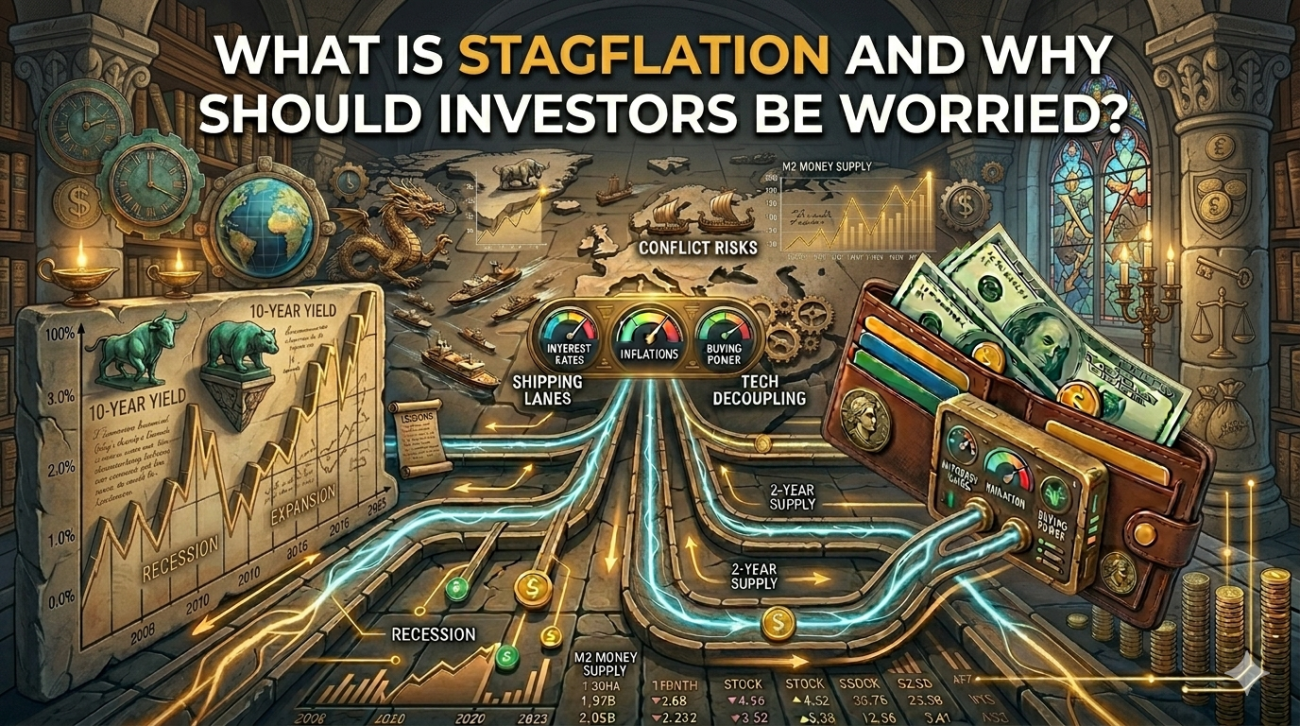
Stagflation is a rare but dangerous economic condition marked by stagnant growth, high unemployment, and rising inflation—all at the same time. This toxic mix defies traditional economic logic, where inflation typically rises during periods of strong growth and falls when the economy slows. For investors, stagflation poses a serious threat because it undermines both stock and bond markets, making it difficult to find safe, profitable investments.
The term gained prominence during the 1970s oil crisis, when the U.S. and other developed economies faced soaring energy prices, sluggish output, and double-digit inflation. Today, concerns about stagflation are resurfacing amid supply chain disruptions, geopolitical tensions, and aggressive monetary tightening. Understanding stagflation isn’t just academic—it’s essential for protecting your portfolio in uncertain times.
Stagflation: The Perfect Economic Storm
Stagflation occurs when an economy experiences three simultaneous problems:
– Stagnant or negative GDP growth
– High unemployment
– Elevated inflation
Normally, inflation and unemployment move in opposite directions—this is known as the Phillips Curve. But in stagflation, both rise together, creating a policy dilemma for central banks. Raising interest rates to fight inflation can worsen unemployment and deepen a recession. Lowering rates to stimulate growth can fuel inflation further.
This imbalance makes stagflation especially hard to manage. Unlike typical recessions, which respond well to stimulus, stagflation requires a delicate balance between fiscal discipline and targeted support. For investors, this uncertainty translates into volatile markets and reduced returns across asset classes.
Historical Examples: Lessons from the Past
The most famous case of stagflation occurred in the 1970s, triggered by oil supply shocks and loose monetary policy. In 1973 and again in 1979, OPEC’s oil embargoes sent energy prices skyrocketing, pushing up costs for businesses and consumers alike. At the same time, productivity growth slowed, and unemployment climbed.
Central banks, including the U.S. Federal Reserve, initially hesitated to raise rates, fearing a deeper downturn. But as inflation spiraled out of control—peaking at over 13% in 1980—aggressive rate hikes became unavoidable. While these eventually tamed inflation, they also triggered a severe recession.
More recently, some economists have warned of stagflation risks following the pandemic. Supply chain bottlenecks, labor shortages, and massive fiscal stimulus have contributed to persistent inflation, even as growth slows in key economies. While not yet full-blown stagflation, the warning signs are hard to ignore.
Why Investors Fear Stagflation
Investors dread stagflation because it erodes the value of both equities and fixed income. Here’s why:
- Stocks struggle: Companies face higher input costs and weaker consumer demand, squeezing profit margins. Growth stocks, which rely on future earnings, are hit hardest.
- Bonds lose value: Rising inflation reduces the real return on bonds. When central banks raise rates to combat inflation, bond prices fall, leading to capital losses.
- Safe havens underperform: Traditional hedges like gold may help, but they offer no income and can be volatile. Cash loses purchasing power rapidly during high inflation.
- Policy uncertainty: Central banks are forced into tough choices, increasing market volatility and reducing investor confidence.
In short, stagflation removes the usual playbook for investors. There’s no clear “risk-on” or “risk-off” strategy—just a landscape of diminished returns and heightened risk.
How to Protect Your Portfolio During Stagflation
While no strategy is foolproof, certain asset classes and tactics can help mitigate stagflation risks:
1. Focus on Inflation-Resistant Assets
Real assets like real estate, infrastructure, and commodities (especially energy and agriculture) tend to hold value during inflationary periods. These assets often have pricing power and benefit from rising input costs.
2. Invest in Defensive Sectors
Sectors such as utilities, consumer staples, and healthcare are less sensitive to economic cycles. People still need electricity, food, and medicine—even during a downturn.
3. Consider TIPS and Floating-Rate Bonds
Treasury Inflation-Protected Securities (TIPS) adjust their principal with inflation, offering a hedge against rising prices. Floating-rate bonds, whose interest payments rise with benchmark rates, also perform better in tightening cycles.
4. Maintain Liquidity and Diversify
Keep a portion of your portfolio in cash or short-term instruments to take advantage of opportunities. Diversification across geographies and asset classes can reduce overall risk exposure.
Key Takeaways
- Stagflation combines stagnant growth, high unemployment, and rising inflation—a rare and dangerous economic scenario.
- It challenges traditional monetary policy and creates significant risks for investors.
- Historical episodes, like the 1970s oil crisis, show how difficult stagflation is to resolve.
- Investors should focus on inflation-resistant assets, defensive sectors, and diversified strategies to protect their portfolios.
- While stagflation isn’t guaranteed, being prepared can make all the difference in preserving wealth during turbulent times.
FAQ: Stagflation Explained
Can stagflation happen again?
Yes, though it’s rare. Factors like supply shocks, geopolitical instability, and poor policy coordination can recreate stagflationary conditions. Current concerns stem from post-pandemic inflation and slowing global growth.
Is stagflation worse than a normal recession?
In many ways, yes. Recessions typically feature low inflation and falling prices, which central banks can counter with rate cuts. Stagflation resists easy fixes, prolonging economic pain and market uncertainty.
What should I invest in if stagflation hits?
Prioritize real assets, defensive stocks, and inflation-protected securities. Avoid long-duration bonds and highly leveraged growth stocks, which tend to underperform in stagflationary environments.
