
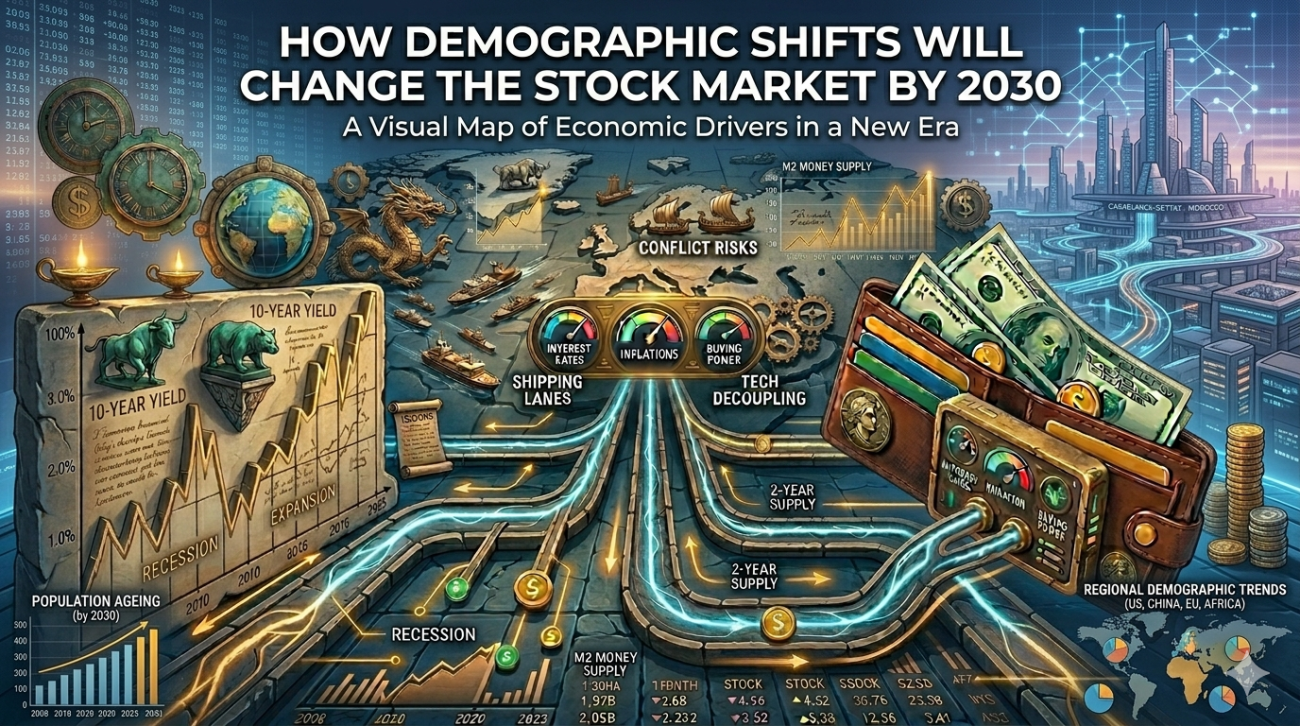
By 2030, demographic shifts will fundamentally reshape the stock market in ways investors can no longer afford to ignore. Aging populations, rising millennial and Gen Z wealth, urbanization trends, and global migration patterns are converging to alter investment flows, sector performance, and market volatility. These changes aren’t distant possibilities—they’re already underway. Understanding how demographic shifts will change the stock market by 2030 is essential for building resilient portfolios and identifying tomorrow’s growth engines today.
Why Demographics Drive Market Trends
Demographics are more than just statistics—they’re powerful economic forces. Consumer behavior, labor supply, savings rates, and spending habits are all deeply influenced by age, income, and geographic distribution. As populations age in developed nations and grow younger in emerging economies, capital allocation will shift accordingly. This isn’t just about who’s buying stocks—it’s about what they’re buying, when, and why.
For example, older investors tend to favor income-generating assets like bonds and dividend stocks, while younger generations lean toward growth-oriented tech and ESG investments. These preferences, multiplied across millions of investors, create macro trends that ripple through entire sectors.
Key Demographic Trends Impacting Markets
- Aging Populations in Developed Economies: Japan, Germany, and parts of Southern Europe are experiencing rapid aging. By 2030, over 30% of Japan’s population will be over 65. This reduces labor participation and increases healthcare demand.
- Millennial and Gen Z Wealth Transfer: Over $68 trillion is expected to shift to younger generations by 2030. These digital-native investors prioritize sustainability, tech innovation, and social impact.
- Urbanization in Emerging Markets: Cities in Africa, India, and Southeast Asia are expanding rapidly, driving infrastructure, real estate, and consumer goods demand.
- Declining Birth Rates in Key Economies: China and South Korea face shrinking workforces, potentially slowing GDP growth and altering export dynamics.
How Aging Populations Will Reshape Investment Flows
As baby boomers retire, they’ll begin drawing down savings rather than accumulating them. This shift from accumulation to decumulation will reduce net capital inflows into equities, particularly in North America and Europe. Retirees often shift portfolios toward safer, income-focused assets, which could dampen stock market growth in traditional sectors.
At the same time, healthcare, eldercare, and pharmaceutical companies stand to benefit. Demand for medical devices, telehealth services, and age-related treatments will surge. Investors should watch for long-term growth in biotech and wellness tech—sectors aligned with demographic aging.
Opportunities in the Silver Economy
- Home healthcare services and remote monitoring devices
- Senior housing and assisted living REITs
- Pharmaceuticals targeting chronic age-related conditions
- Fintech solutions for retirement planning and pension management
The Rise of Millennial and Gen Z Investors
By 2030, millennials will represent the largest cohort of investors globally. Their values-driven approach is already influencing market trends. ESG (Environmental, Social, and Governance) investing, once a niche, is now mainstream—driven largely by younger investors.
Gen Z, entering the workforce and beginning to invest, brings even stronger preferences for digital platforms, cryptocurrency, and decentralized finance. Their comfort with technology accelerates adoption of robo-advisors, fractional shares, and mobile trading apps.
This generational shift favors companies with strong digital infrastructure, transparent supply chains, and commitments to diversity and climate action. Tech giants, renewable energy firms, and fintech innovators are likely to outperform as these cohorts gain financial power.
Sectors Poised for Growth from Younger Investors
- Sustainable energy and electric vehicles
- Digital health and mental wellness platforms
- Edtech and lifelong learning platforms
- Social commerce and creator economy enablers
Global Migration and Emerging Market Momentum
Demographic shifts aren’t confined to the West. Africa’s population is projected to double by 2050, with a median age under 20. This youthful demographic boom creates a massive future consumer base and labor force. By 2030, African markets could see accelerated GDP growth, driving demand for infrastructure, mobile banking, and consumer goods.
India, too, is experiencing a demographic dividend. With over 65% of its population under 35, the country is becoming a hub for tech talent, manufacturing, and domestic consumption. Indian equities, particularly in IT, renewables, and digital services, may see sustained inflows.
Investors should consider geographic diversification. While U.S. and European markets mature, emerging economies offer higher growth potential—albeit with increased volatility and political risk.
Implications for Market Volatility and Investment Strategy
Demographic changes don’t happen overnight, but their cumulative effect will increase market complexity. Aging populations may reduce risk appetite, while younger investors push for innovation and disruption. This tension could lead to sector rotation, valuation swings, and new forms of volatility.
Long-term investors should adopt a demographic-aware strategy:
- Balance growth and income assets based on generational trends
- Overweight sectors aligned with aging and youth-driven demand
- Diversify geographically to capture emerging market growth
- Use ESG and impact investing as filters for future-proof portfolios
Key Takeaways
- Demographic shifts will significantly influence stock market performance by 2030.
- Aging populations will boost healthcare and income-generating assets.
- Millennials and Gen Z will drive demand for tech, sustainability, and digital finance.
- Emerging markets, especially in Africa and India, offer high-growth opportunities.
- Investors must adapt strategies to reflect changing consumer behaviors and capital flows.
FAQ
How will aging populations affect stock market returns?
Aging populations may reduce overall market growth as retirees withdraw savings and shift to safer assets. However, sectors like healthcare, pharmaceuticals, and senior services will likely see increased demand and stronger performance.
Which industries will benefit most from younger investors?
Technology, renewable energy, fintech, digital health, and ESG-focused companies are best positioned to benefit from millennial and Gen Z investment trends. These generations prioritize innovation, sustainability, and social impact.
Should investors shift focus to emerging markets due to demographic trends?
Yes, but with caution. Emerging markets in Africa and South Asia offer strong growth potential due to young, expanding populations. However, political risk, currency volatility, and regulatory uncertainty require careful due diligence and diversification.
