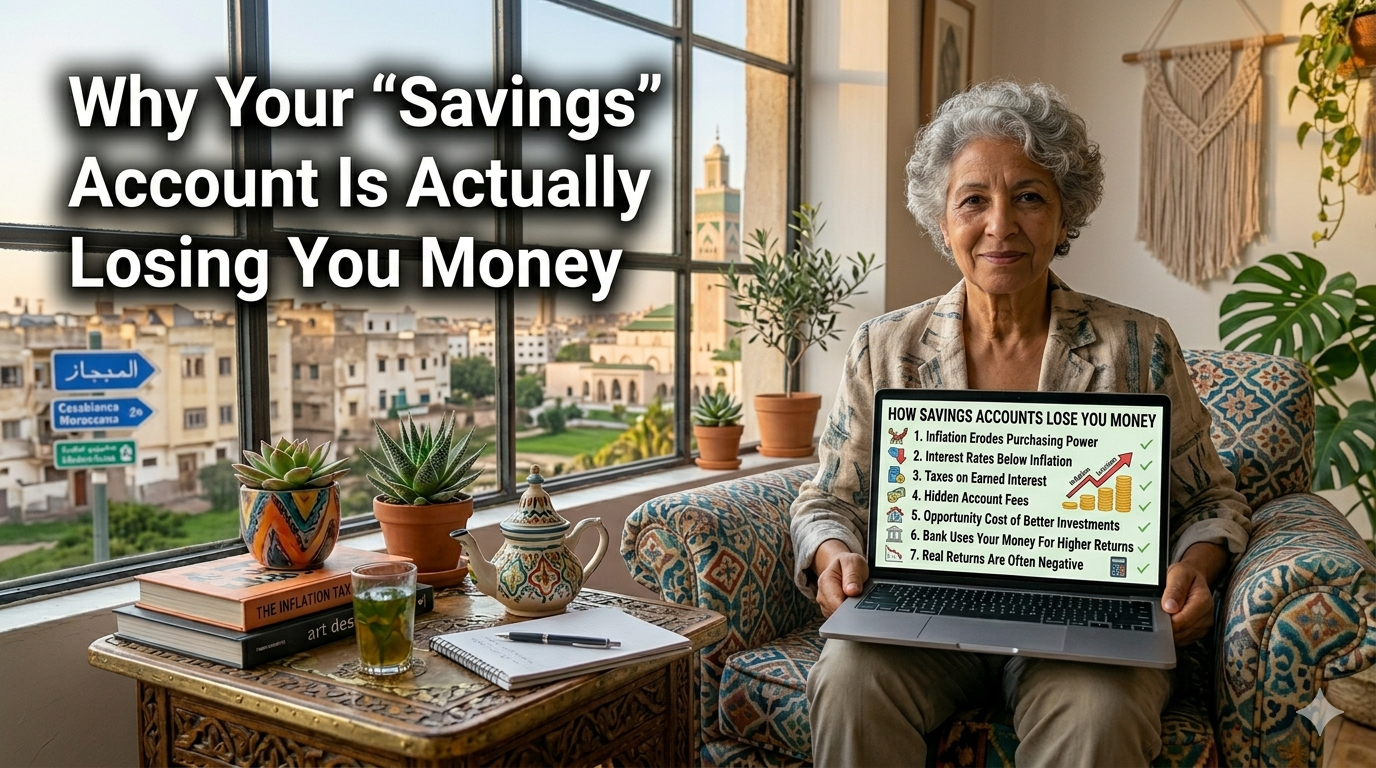
You’ve been diligent—setting aside money each month, watching your balance grow, feeling proud of your financial discipline. But here’s the hard truth: your so-called “savings” account might be quietly eroding your wealth. With inflation outpacing interest rates at historic levels, many traditional savings accounts are delivering negative real returns. That means your money is losing purchasing power, even as the number in your account ticks upward.
This isn’t just a minor inconvenience—it’s a silent financial leak. While you think you’re building security, your cash could be shrinking in real terms. Understanding why this happens—and what to do about it—is essential for anyone serious about long-term financial health.
The Hidden Cost of Low Interest Rates
Most standard savings accounts offer interest rates between 0.01% and 0.50% annually. Meanwhile, inflation in many countries has consistently hovered between 2% and 7% in recent years. When inflation exceeds your interest earnings, your money loses value over time.
For example, if you have $10,000 in a savings account earning 0.25% interest, you’ll earn $25 in a year. But if inflation is 5%, that same $10,000 will only buy what $9,500 could a year ago. You’ve technically “saved” $25—but you’ve lost $500 in real purchasing power.
This gap between nominal returns and inflation is called the real interest rate, and when it’s negative, your savings are effectively shrinking.
How Inflation Eats Your Savings
Inflation doesn’t just raise prices—it reduces the value of every dollar you hold. Think of it as a tax on cash. The longer your money sits idle in a low-yield account, the more it’s worth less in terms of what it can buy.
Consider this:
- $100 today may only be worth $95 in a year due to inflation.
- Even with interest, if your account earns less than inflation, you’re falling behind.
- Over a decade, this erosion compounds, significantly reducing your wealth.
This is especially damaging for emergency funds or long-term goals like retirement. What seems safe and stable is actually working against you.
Why Banks Keep Rates So Low
Banks profit from the spread between what they pay you in interest and what they charge borrowers. When central banks keep policy rates low, savings account yields follow. Many traditional banks also rely on customer inertia—most people don’t switch accounts, so there’s little incentive to offer better rates.
Additionally, large banks have massive overhead costs and often prioritize shareholder returns over competitive interest offerings. As a result, they pass on minimal benefits to savers.
Online banks and fintech platforms, by contrast, often offer higher yields due to lower operating costs—yet many consumers remain unaware or hesitant to switch.
Better Alternatives to Traditional Savings
The good news? You don’t have to accept negative returns. Several smarter options can help preserve—and even grow—your purchasing power:
High-Yield Savings Accounts
Offered primarily by online banks, these accounts typically yield 3% to 5% annually—far above traditional banks. They’re FDIC-insured (or equivalent), liquid, and ideal for emergency funds.
Money Market Accounts
These often come with check-writing privileges and slightly higher rates than standard savings. They’re a flexible middle ground between safety and return.
Certificates of Deposit (CDs)
CDs lock your money for a fixed term (6 months to 5 years) in exchange for higher interest. While less liquid, they offer predictable returns and protection from rate drops.
TIPS and I-Bonds
U.S. Treasury Inflation-Protected Securities (TIPS) and Series I Savings Bonds adjust with inflation, ensuring your investment keeps pace with rising prices. I-Bonds, in particular, have recently offered rates above 6%.
Short-Term Bond Funds
For slightly more risk, short-duration bond ETFs or mutual funds can offer better yields with modest volatility. These are best for funds you won’t need immediately.
Key Takeaways
- Your savings account may be losing value due to inflation outpacing interest rates.
- Negative real returns mean your money buys less over time, even if the balance grows.
- Traditional banks often offer rates too low to beat inflation.
- High-yield savings, CDs, I-Bonds, and short-term bonds are better alternatives.
- Actively managing where you keep your cash is a critical part of financial planning.
FAQ
Is my money safe in a high-yield savings account?
Yes, as long as the bank is FDIC-insured (in the U.S.) or protected by a similar government scheme. High-yield accounts from reputable online banks are just as safe as traditional ones.
Should I move all my savings to investments like stocks?
Not necessarily. Emergency funds should remain liquid and low-risk. But for money you won’t need for 3–5 years, consider diversified investments to outpace inflation.
How often do savings account interest rates change?
Rates can change at any time, especially in response to central bank policy. Online banks often adjust rates more frequently than traditional banks, so it pays to monitor them.
The bottom line? A savings account should protect your money—not punish it. By understanding the real cost of low interest and inflation, you can make smarter choices that keep your wealth growing, not shrinking. Don’t let your “safe” money work against you.
