
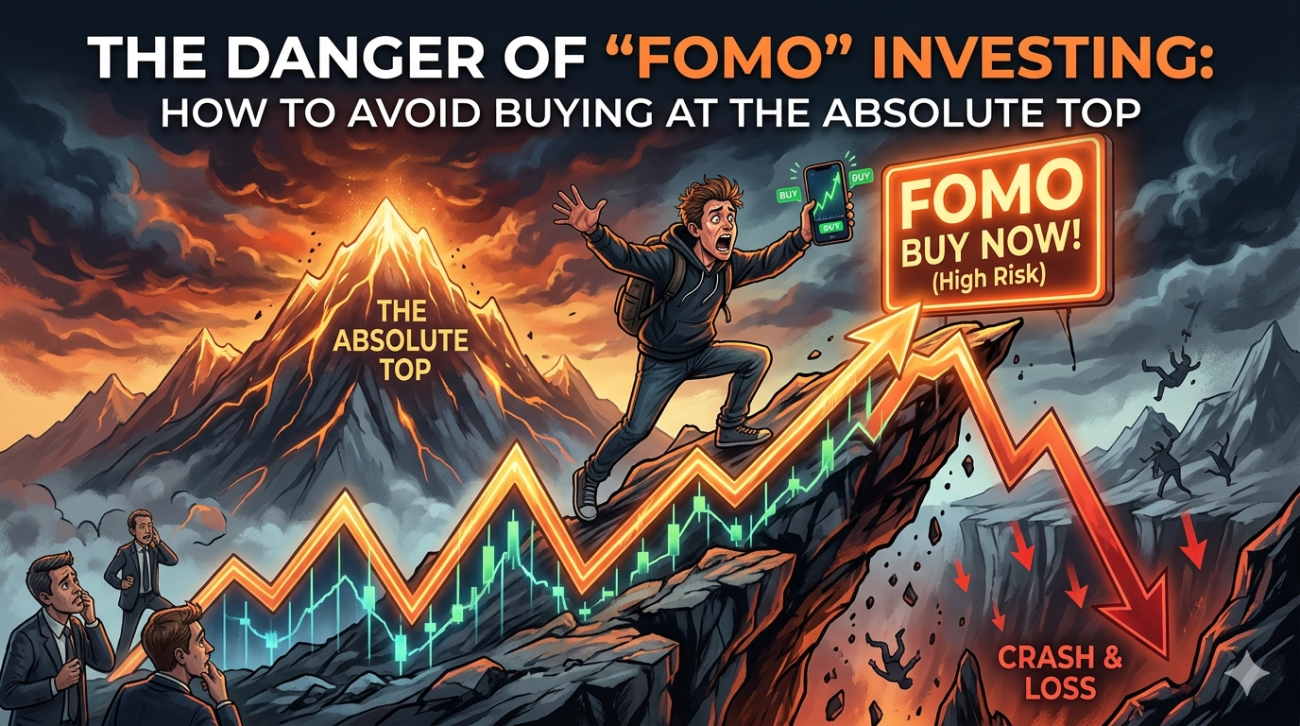
You’ve seen it happen: a stock, cryptocurrency, or meme asset surges overnight. Everyone’s talking about it. Your friends are posting gains. Social media is buzzing. Suddenly, you feel it—the gut-wrenching fear of missing out. That’s FOMO investing, and it’s one of the most dangerous psychological traps in the financial world. The real risk? Buying at the absolute top, just before a sharp correction. This article dives deep into the danger of FOMO investing, why it leads to poor decisions, and—most importantly—how to avoid becoming a victim of your own emotions.
What Is FOMO Investing and Why Is It So Dangerous?
FOMO, or the “fear of missing out,” is a powerful emotional driver that pushes investors to jump into rising assets without proper analysis. It’s not just about greed—it’s about social pressure, regret avoidance, and the illusion of opportunity slipping away. When asset prices skyrocket rapidly, FOMO kicks in, clouding judgment and overriding logic.
The danger of FOMO investing lies in its timing. Most investors influenced by FOMO enter the market at or near peak prices. They buy high, often after a significant run-up, and are left holding the bag when the inevitable pullback occurs. This pattern repeats across markets—whether it’s Bitcoin in 2017, GameStop in 2021, or AI stocks in 2023.
Emotional investing rarely leads to long-term success. While FOMO may deliver short-term excitement, it often results in significant losses. Recognizing this trap is the first step toward disciplined, rational investing.
How FOMO Leads to Buying at the Top
FOMO distorts your perception of value and risk. When everyone around you is celebrating gains, it’s easy to assume the trend will continue indefinitely. But markets are cyclical. What goes up must come down—especially when driven by hype rather than fundamentals.
Here’s how FOMO typically unfolds:
- Hype Builds: A new asset or trend gains media attention. Influencers, news outlets, and social media amplify the narrative.
- Price Surges: Early adopters profit, and the asset experiences rapid price increases. Charts show parabolic growth.
- Social Proof Kicks In: Friends, family, or online communities share their gains. You start questioning why you’re not participating.
- Emotional Decision: Fear of regret outweighs caution. You buy in—often at the highest price.
- Correction Hits: The bubble bursts. Prices drop sharply. You’re left with losses and regret.
This cycle is not just common—it’s predictable. And yet, countless investors fall into it year after year.
Real-World Examples of FOMO Investing Gone Wrong
The 2017 Bitcoin Bubble
Bitcoin’s meteoric rise from under $1,000 to nearly $20,000 in 2017 was fueled by mass FOMO. Mainstream media coverage, celebrity endorsements, and viral social media posts convinced millions to buy in. Many entered the market in late 2017, just before the crash. Within a year, Bitcoin lost over 80% of its value.
GameStop and the Meme Stock Mania
In early 2021, retail investors on Reddit drove GameStop’s stock from $20 to over $480 in a matter of weeks. The frenzy was fueled by a mix of rebellion, community, and FOMO. Many latecomers bought near the peak, only to see the stock plummet back to double digits within months.
The NFT Boom of 2021–2022
Non-fungible tokens (NFTs) exploded in popularity, with digital art selling for millions. As prices soared, FOMO drove new buyers to overpay for JPEGs. When the bubble burst, most NFTs lost 90% or more of their value, leaving late investors with worthless assets.
These examples aren’t outliers—they’re textbook cases of emotional investing. The pattern is clear: FOMO leads to buying at the top, and buying at the top leads to losses.
Signs You’re Falling for FOMO Investing
Recognizing the warning signs can save you from costly mistakes. Ask yourself these questions before making a move:
- Am I buying because the asset is fundamentally strong—or because everyone else is?
- Have I done my own research, or am I relying on social media hype?
- Am I investing money I can afford to lose, or am I stretching my budget to “get in”?
- Do I understand the risks, or am I assuming the trend will never end?
- Am I feeling anxious about missing out, rather than confident in my decision?
If you answer “yes” to any of these, pause. Take a breath. Step back. FOMO thrives on urgency—but smart investing requires patience.
How to Avoid Buying at the Absolute Top
Avoiding FOMO isn’t about missing opportunities—it’s about choosing the right opportunities at the right time. Here’s how to protect yourself:
1. Stick to a Predefined Investment Strategy
Having a clear plan removes emotion from the equation. Define your goals, risk tolerance, and entry/exit criteria before you invest. Whether it’s dollar-cost averaging, value investing, or growth-focused strategies, consistency beats impulse.
2. Use Dollar-Cost Averaging (DCA)
DCA involves investing a fixed amount at regular intervals, regardless of price. This strategy reduces the impact of volatility and prevents you from dumping all your capital at a peak. It’s especially effective in volatile markets like crypto.
3. Do Your Own Research (DYOR)
Never invest based solely on social media or word of mouth. Analyze financial statements, market trends, competitive advantages, and long-term potential. If you can’t explain why an asset is valuable in simple terms, don’t buy it.
4. Avoid Herd Mentality
Just because everyone is buying doesn’t mean it’s a good idea. The crowd is often wrong at critical turning points. Be the contrarian who waits for value, not the follower who chases hype.
5. Set Price Alerts and Take-Profit Targets
Use tools to automate discipline. Set alerts for when an asset reaches your target buy price—and stick to it. Similarly, define exit points in advance to lock in gains and avoid greed-driven holding.
6. Limit Social Media Exposure
Social media amplifies FOMO. Unfollow accounts that glorify quick riches or promote speculative assets. Surround yourself with educational content and balanced perspectives instead.
7. Embrace the Power of Waiting
Patience is a superpower in investing. Markets always present new opportunities. Missing one rocket doesn’t mean you’ve lost forever. In fact, waiting often leads to better entry points.
The Psychology Behind FOMO: Why We Fall for It
FOMO isn’t just about money—it’s deeply rooted in human psychology. Our brains are wired to seek social approval and avoid regret. When we see others profiting, our dopamine systems activate, creating a sense of urgency. This biological response can override rational thinking.
Behavioral finance studies show that investors are more likely to take risks when they perceive others are succeeding. This is known as social proof. It’s why viral trends spread so quickly—and why FOMO investing is so widespread.
Understanding this bias is crucial. Once you recognize that FOMO is an emotional trigger, not a strategy, you can begin to manage it.
Key Takeaways: Protecting Yourself from FOMO Investing
- FOMO investing leads to buying high and selling low—the opposite of smart investing.
- The danger of FOMO investing is real: it causes investors to enter markets at peak prices, often resulting in significant losses.
- Emotional decisions, herd mentality, and lack of research are the hallmarks of FOMO-driven behavior.
- To avoid buying at the absolute top, stick to a strategy, use dollar-cost averaging, and do your own research.
- Patience, discipline, and self-awareness are your best defenses against FOMO.
FAQ: FOMO Investing and Market Timing
What is FOMO in investing?
FOMO (fear of missing out) in investing refers to the emotional urge to buy an asset because others are profiting from it, often leading to impulsive decisions and poor timing.
How can I tell if I’m falling for FOMO?
Signs include feeling anxious about missing gains, buying based on social media hype, investing without research, or stretching your budget to “get in” on a hot trend.
Is it ever okay to invest during a market surge?
Yes—if the investment aligns with your strategy, is based on solid fundamentals, and you’re not overextending yourself. But avoid chasing parabolic moves driven purely by hype.
What’s the best way to avoid buying at the top?
The best approach is to use dollar-cost averaging, maintain a long-term strategy, and avoid emotional decisions. Waiting for pullbacks or better valuations often leads to stronger returns.
FOMO investing is a trap that ensnares even experienced traders. But with awareness, discipline, and the right tools, you can avoid buying at the absolute top—and build wealth the smart way. Remember: the best investments aren’t the ones everyone is talking about. They’re the ones you understand, believe in, and enter with calm confidence.
