
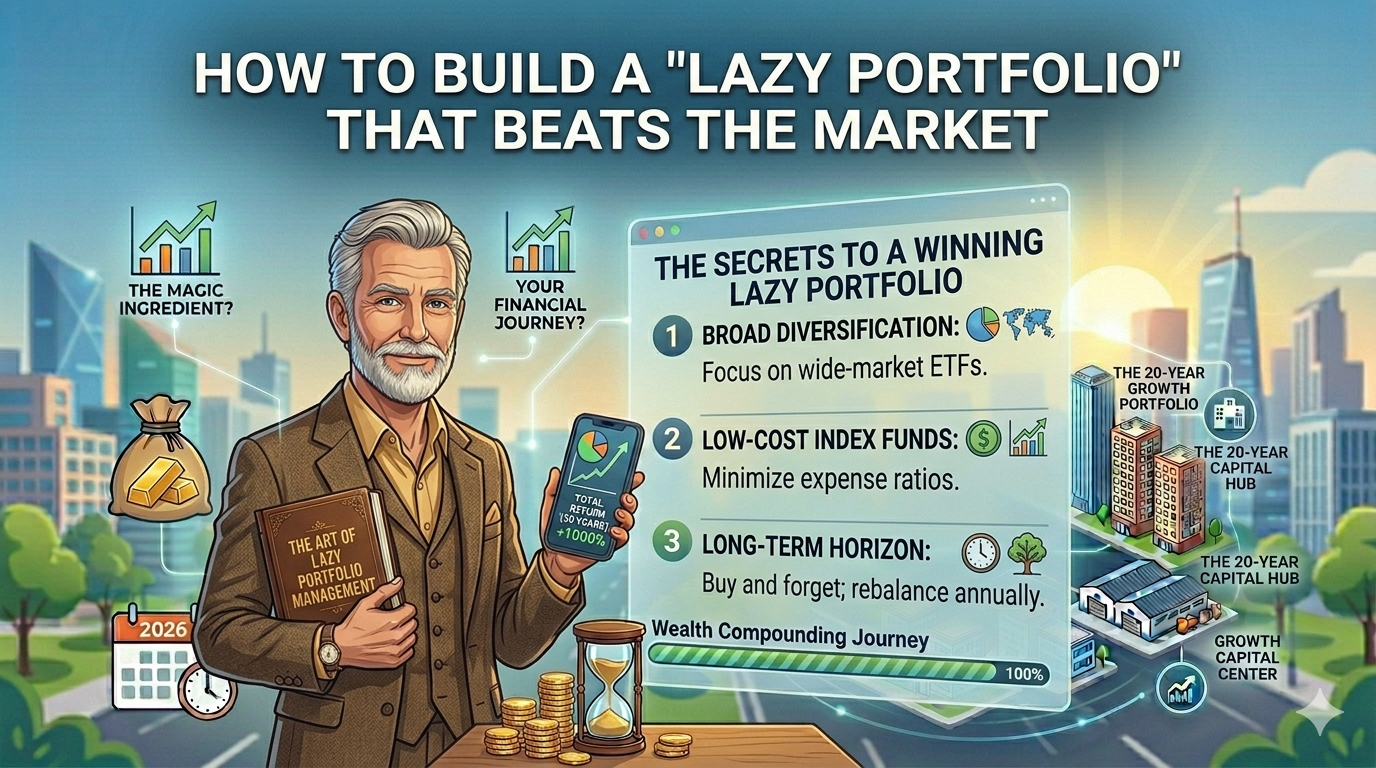
Want to grow your wealth without spending hours analyzing stocks or chasing market trends? A lazy portfolio might be your answer. This simple, low-maintenance investment strategy uses broad-market index funds to deliver strong, consistent returns—often outperforming actively managed portfolios over time. By focusing on diversification, low fees, and long-term discipline, a lazy portfolio reduces stress while maximizing results. It’s not about getting rich quick; it’s about building sustainable wealth with minimal effort.
What Is a Lazy Portfolio?
A lazy portfolio is a passive investment approach built around a small number of low-cost index funds or ETFs. Instead of picking individual stocks or timing the market, investors spread their money across major asset classes—like U.S. stocks, international stocks, and bonds—using funds that track entire markets. The “lazy” part comes from how little maintenance it requires: once set up, it often needs only annual rebalancing.
This strategy appeals to investors who value simplicity, cost-efficiency, and evidence-based results. Studies show that over 80% of actively managed funds fail to beat their benchmarks over 15 years. A lazy portfolio sidesteps this by owning the market—not trying to beat it.
Core Principles of a Lazy Portfolio
- Broad diversification: Spread risk across thousands of companies and multiple countries.
- Low fees: Use index funds with expense ratios under 0.20%.
- Minimal trading: Avoid frequent buying and selling to reduce taxes and emotional decisions.
- Long-term focus: Stay invested through market ups and downs.
Why Lazy Portfolios Often Beat the Market
At first glance, a lazy portfolio might seem too simple to succeed. Yet, its strength lies in its consistency. By avoiding high fees, emotional trading, and stock-picking errors, it captures nearly the full return of the market—something most investors never achieve.
Actively managed funds charge higher fees and often underperform due to poor timing or concentrated bets. In contrast, a lazy portfolio benefits from compounding, global exposure, and the power of market averages. Over decades, even small advantages in fees and discipline add up significantly.
Real-World Performance
One well-known example is the “Three-Fund Portfolio,” popularized by investors like Bogleheads. It typically includes:
- A U.S. total stock market index fund (e.g., VTI or FSKAX)
- An international stock index fund (e.g., VXUS or FTIGX)
- A U.S. total bond market index fund (e.g., BND or FXNAX)
Backtesting shows this mix has historically returned 7–9% annually over the long term—outperforming the majority of actively managed portfolios after fees.
How to Build Your Own Lazy Portfolio
Creating a lazy portfolio is straightforward. Follow these steps to get started:
1. Choose Your Asset Allocation
Decide how much to allocate to stocks vs. bonds based on your age, risk tolerance, and goals. A common rule of thumb:
- Age 20–35: 80–90% stocks, 10–20% bonds
- Age 36–50: 70–80% stocks, 20–30% bonds
- Age 51–65: 60–70% stocks, 30–40% bonds
- Age 65+: 40–60% stocks, 40–60% bonds
Stocks offer higher growth potential; bonds add stability and reduce volatility.
2. Select Low-Cost Index Funds or ETFs
Stick to funds with proven track records and low expense ratios. Popular choices include:
- Vanguard Total Stock Market ETF (VTI): U.S. large, mid, and small caps
- Vanguard Total International Stock ETF (VXUS): Developed and emerging markets
- Vanguard Total Bond Market ETF (BND): U.S. investment-grade bonds
These three funds alone can form a complete, globally diversified portfolio.
3. Automate Your Investments
Set up automatic contributions to your portfolio through a brokerage or retirement account (like a Roth IRA or 401(k)). Dollar-cost averaging—investing fixed amounts regularly—smooths out market volatility and removes emotion from the process.
4. Rebalance Once a Year
Check your portfolio annually. If one asset class has grown too large (e.g., stocks now make up 85% instead of 80%), sell a small portion and buy more of the underweight fund. This maintains your target risk level and enforces discipline.
Key Takeaways
- A lazy portfolio uses low-cost index funds to achieve broad market exposure with minimal effort.
- It often outperforms active strategies due to lower fees, reduced trading, and long-term consistency.
- Building one requires choosing an asset allocation, selecting diversified funds, automating contributions, and rebalancing yearly.
- The goal isn’t to beat the market every year—it’s to capture market returns efficiently and sustainably.
FAQ
Can a lazy portfolio really beat the market?
Not in the traditional sense of outperforming benchmarks every year. But over the long term, it often beats most investors—including professionals—because it avoids common pitfalls like high fees, emotional trading, and poor timing. By owning the market, you get market returns minus minimal costs, which is a winning formula.
How many funds do I really need?
Three to five well-chosen index funds are usually enough. A U.S. stock fund, an international stock fund, and a bond fund can cover nearly all your needs. Adding a real estate (REIT) or small-cap fund is optional but not required for most investors.
Is a lazy portfolio safe during market crashes?
No investment is completely safe, but a lazy portfolio is designed to weather downturns. Its diversification reduces risk, and its long-term focus discourages panic selling. Historically, markets have recovered from every major crash—and a lazy portfolio stays invested through it all.
Final Thoughts
Building a lazy portfolio isn’t about being unambitious—it’s about being smart. In a world of complex strategies and financial noise, simplicity often wins. By focusing on what you can control—fees, diversification, and discipline—you position yourself to grow wealth steadily, year after year, without the stress.
Start small, stay consistent, and let time and compounding do the heavy lifting. That’s the real secret to a lazy portfolio that beats the market.
