
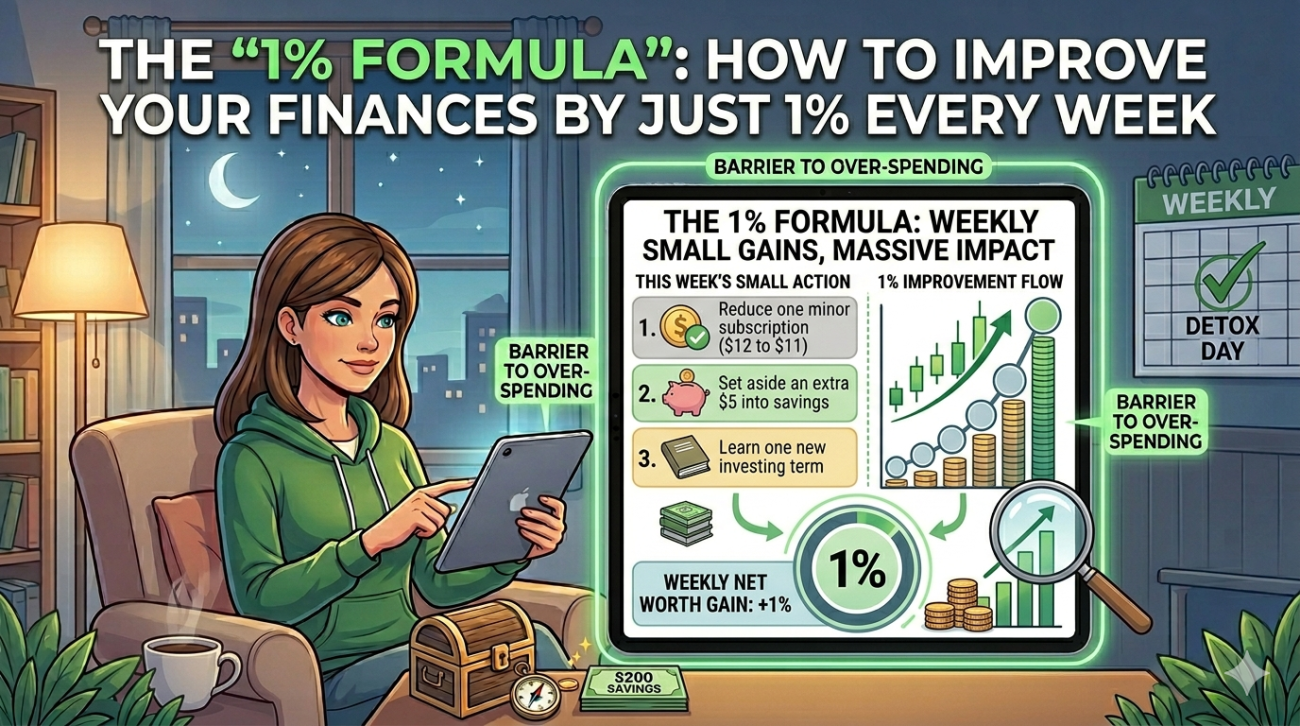
What if you could transform your financial future without drastic budget cuts, risky investments, or overnight lifestyle changes? The answer lies in a simple yet powerful strategy: the “1% Formula”—a method that helps you improve your finances by just 1% every week. This isn’t about getting rich quickly. It’s about building sustainable, long-term wealth through consistent, incremental progress. By focusing on small, manageable improvements each week, you create momentum that compounds over time, turning tiny gains into major financial breakthroughs.
Most people believe financial success requires dramatic sacrifices or complex strategies. But research shows that small, consistent actions—like saving an extra $5 a week or reducing unnecessary spending by 1%—lead to lasting change. The 1% Formula leverages the power of compounding, not just in your bank account, but in your habits, mindset, and financial discipline. Whether you’re living paycheck to paycheck or already saving regularly, this approach can help you level up your money game—one percent at a time.
Why the 1% Formula Works: The Science of Tiny Gains
The 1% Formula is rooted in behavioral psychology and the principle of marginal gains. In sports, business, and personal development, experts have proven that improving by just 1% daily leads to a 37x improvement over a year. Applied to personal finance, this means that small weekly adjustments—like cutting one unnecessary subscription or increasing your savings rate by 0.5%—can result in dramatic long-term results.
For example, if you earn $50,000 a year and save 5% ($2,500), increasing that by just 1% weekly means saving an extra $96 over the year. That might not sound like much, but over five years, with compound interest, it could grow into thousands. More importantly, the habit of improving weekly builds financial resilience, reduces stress, and increases confidence in managing money.
This method also reduces the overwhelm that often derails financial goals. Instead of trying to overhaul your entire budget overnight, you focus on one small change—like packing lunch twice a week or negotiating a lower internet bill. These micro-actions are sustainable, repeatable, and far more likely to stick than drastic measures.
How to Apply the 1% Formula to Your Finances
Implementing the 1% Formula is simple. Each week, choose one area of your finances to improve by 1%. This could be reducing expenses, increasing income, boosting savings, or improving financial knowledge. The key is consistency—not perfection.
1. Track Your Starting Point
Before you begin, get a clear picture of your current financial situation. Use a budgeting app or spreadsheet to track your income, expenses, savings, and debt. This baseline helps you measure progress and identify areas for improvement.
2. Choose One Weekly Focus
Each week, pick one specific area to improve by 1%. Examples include:
- Reducing dining out expenses by 1%
- Increasing your emergency fund contribution by 1%
- Cutting utility bills by switching to energy-efficient habits
- Earning an extra $10 through a side gig or selling unused items
Rotate focus areas weekly—spend one week on spending, the next on saving, then income, then debt. This balanced approach ensures holistic financial growth.
3. Automate Where Possible
Use automation to make the 1% improvement effortless. Set up automatic transfers to savings, round-up apps that invest spare change, or bill alerts to avoid late fees. Automation removes the need for constant willpower and ensures consistency.
4. Review and Adjust Weekly
At the end of each week, review your progress. Did you meet your 1% goal? What worked? What didn’t? Use this reflection to refine your approach and stay motivated. Celebrate small wins—they reinforce positive behavior.
Real-Life Examples of the 1% Formula in Action
Let’s look at how real people have used the 1% Formula to transform their finances.
Sarah, a teacher earning $45,000 a year: She started by reducing her coffee purchases from 5 days a week to 4—a 20% drop, but only a 1% impact on her weekly spending. Over a year, she saved $416. She then used that money to start a Roth IRA, contributing an extra $35 a month. Five years later, her account has grown to over $3,000, thanks to compound interest.
James, a freelance graphic designer: He committed to increasing his hourly rate by 1% every week through skill development and client negotiations. In 6 months, his rate increased by 26%. He also began saving 1% more of each payment automatically. His income and savings both grew steadily without burnout.
Maria, a single mom of two: She focused on reducing grocery spending by 1% weekly by meal planning and using coupons. She saved $120 in three months and used it to pay off a high-interest credit card. The interest savings alone freed up $30 a month, which she redirected to her kids’ college fund.
These stories show that the 1% Formula isn’t about dramatic changes—it’s about steady, intentional progress that adds up over time.
Overcoming Common Obstacles
Even the best strategies face challenges. Here’s how to stay on track with the 1% Formula when life gets in the way.
“I Don’t Have Enough Time”
You don’t need hours—just 10–15 minutes a week to review your finances and identify one small improvement. Use Sunday evenings to plan your weekly goal. Treat it like a non-negotiable appointment with your future self.
“I Keep Forgetting to Track Progress”
Use reminders on your phone, a habit tracker app, or a simple notebook. Pair your weekly review with an existing habit, like your morning coffee or Friday night wind-down. Consistency comes from routine, not motivation.
“What If I Hit a Plateau?”
It’s normal to plateau. When progress slows, revisit your goals. Are you challenging yourself enough? Try increasing the 1% to 1.5% or focus on a new area, like investing or debt payoff. Plateaus are signals to adapt, not quit.
Key Takeaways: Master the 1% Formula
- The 1% Formula is a sustainable, science-backed method to improve your finances through small, weekly changes.
- Focus on one area each week—spending, saving, income, or debt—and aim for a 1% improvement.
- Use automation, tracking, and reflection to maintain consistency and measure progress.
- Small gains compound over time, leading to significant financial growth and confidence.
- Real people have used this method to save hundreds, increase income, and reduce debt—without drastic lifestyle changes.
Frequently Asked Questions
How long does it take to see results with the 1% Formula?
You may notice small improvements within weeks—like lower bills or a growing savings balance. However, the real power of the 1% Formula emerges over months and years. Compounding effects mean that consistent weekly gains lead to exponential growth in your financial health.
Can the 1% Formula work if I’m in debt?
Absolutely. The 1% Formula is especially effective for debt reduction. For example, paying just 1% more toward your credit card each week reduces interest and shortens your payoff timeline. Pair this with income-boosting strategies, and you’ll gain momentum quickly.
What if I miss a week?
Don’t panic. Life happens. The key is to get back on track the following week. The 1% Formula is about long-term consistency, not perfection. One missed week won’t derail your progress—just refocus and keep going.
Start Small, Win Big
The “1% Formula” isn’t a get-rich-quick scheme. It’s a mindset shift—a commitment to progress over perfection. By improving your finances by just 1% every week, you build habits that last a lifetime. You reduce financial stress, increase your savings, and create a foundation for long-term wealth.
You don’t need a six-figure income or a finance degree to succeed. You just need consistency, awareness, and the willingness to take one small step each week. Whether it’s saving an extra dollar, cutting a subscription, or learning a new money skill, every 1% improvement moves you closer to financial freedom.
So, what’s your first 1% improvement going to be? Start today. Track it. Celebrate it. Then do it again next week. Before you know it, you’ll look back and wonder how such small steps led to such big changes.
