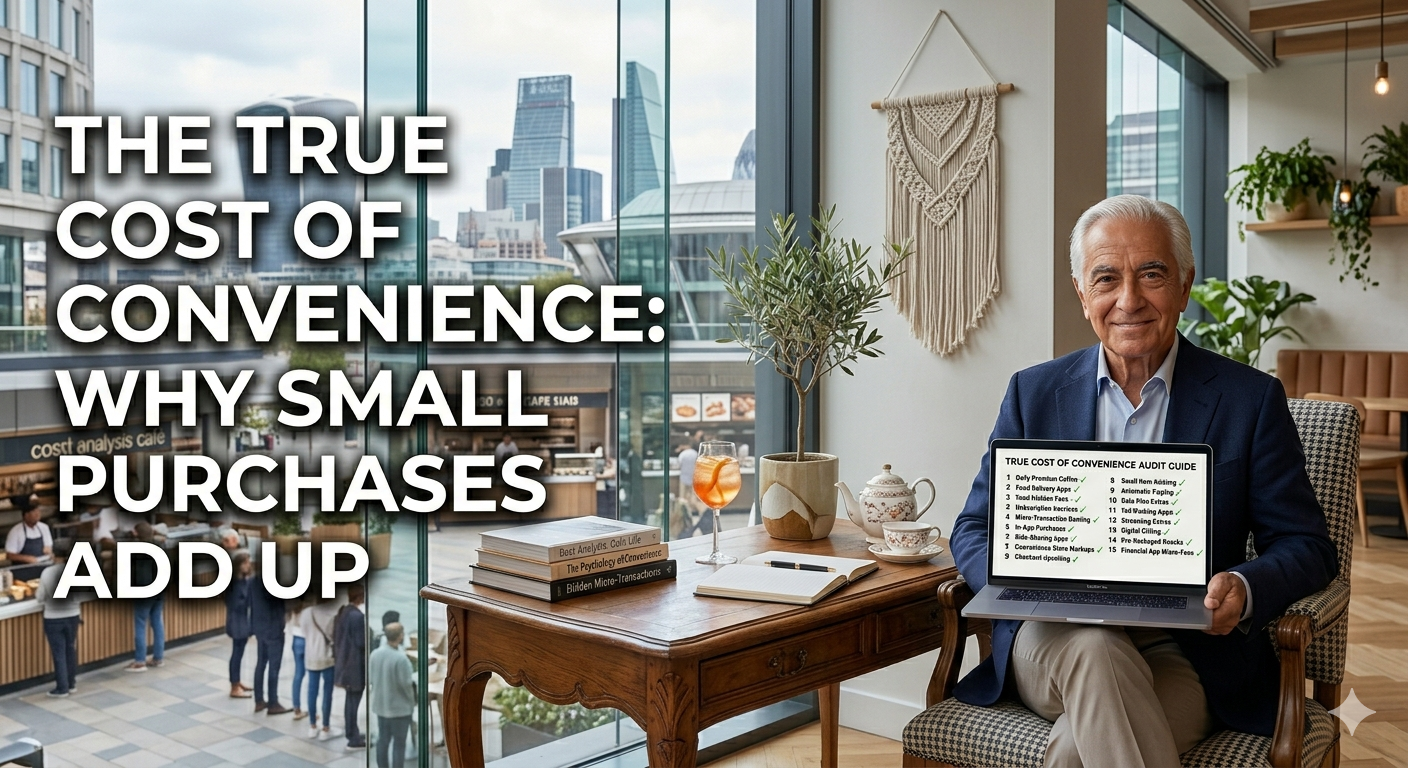
We’ve all done it—grabbed a $5 coffee, tapped “buy now” on a $12 snack delivery, or tossed a $3 impulse item into our online cart. These small purchases feel harmless in the moment. But what if they’re quietly draining your bank account? The true cost of convenience isn’t just in the price tag—it’s in the cumulative effect of dozens of tiny expenses that slip under your financial radar every week.
How Daily Convenience Becomes a Financial Leak
Convenience is seductive. It saves time, reduces effort, and delivers instant gratification. But that ease comes at a hidden price. A daily $4.50 latte may seem trivial, but over a year, it totals $1,642.50. Add in $8 lunch deliveries five times a week, and you’re spending over $2,000 annually on food alone—money that could have gone toward savings, investments, or debt repayment.
These micro-transactions are designed to feel insignificant. Apps, one-click ordering, and subscription models normalize spending without friction. The result? A phenomenon known as the “latte factor”—a term coined by financial expert David Bach to describe how small, recurring expenses erode long-term wealth.
The Psychology Behind Impulse Spending
Retailers and tech platforms are masters of behavioral psychology. They use urgency (“Only 2 left!”), personalization (“You might also like…”), and seamless checkout processes to encourage impulse buys. Even the shift from cash to digital payments reduces the “pain of paying,” making it easier to overlook small charges.
Studies show that people spend up to 23% more when using cards or mobile wallets compared to cash. Why? Because physical money creates a tangible sense of loss. Digital transactions feel abstract—just numbers on a screen. This disconnect allows small purchases to accumulate unnoticed.
Real-Life Examples of Hidden Costs
Consider these common convenience-driven habits and their annual impact:
- Subscription creep: $10/month for streaming, $5 for cloud storage, $15 for a meal kit—totaling $360/year.
- Delivery fees and tips: $3 delivery fee × 3x/week = $468/year.
- Convenience store snacks: $2.50/day = $912.50/year.
- Auto-renewing apps: Forgotten subscriptions can cost $200+/year if not tracked.
Together, these seemingly minor expenses can exceed $3,000 annually—enough to fund a vacation, pay off credit card debt, or boost an emergency fund.
Why Small Purchases Are Hard to Track
Unlike large expenses—rent, car payments, or medical bills—small purchases don’t trigger financial alarms. They’re分散 (scattered), frequent, and often automated. Many people don’t review bank statements line by line, allowing these charges to blend into the background.
Moreover, budgeting tools often categorize these expenses under broad labels like “miscellaneous” or “dining,” making it hard to identify patterns. Without visibility, it’s nearly impossible to change behavior.
How to Take Control of Micro-Spending
The good news? You don’t need to eliminate convenience entirely. Instead, adopt mindful spending habits to reduce waste without sacrificing quality of life.
1. Audit Your Spending
Review your bank and credit card statements for the past 30 days. Highlight every transaction under $20. You’ll likely be surprised by the volume and variety.
2. Implement the 24-Hour Rule
For non-essential purchases over $10, wait 24 hours before buying. This simple delay reduces impulse spending by up to 40%, according to consumer behavior research.
3. Use Cash or Envelope Budgeting for Discretionary Spending
Allocate a fixed amount of cash each week for convenience purchases. Once it’s gone, no more spending. This creates a hard limit and increases awareness.
4. Unsubscribe and Opt Out
Cancel unused subscriptions. Disable one-click ordering on shopping apps. Turn off auto-renewals. Each step reduces friction and temptation.
5. Automate Savings First
Before spending, automate a transfer to savings. If you save $10/day from avoided small purchases, you’ll have $3,650 in a year—with zero lifestyle sacrifice.
Key Takeaways
- Small purchases may seem insignificant individually, but they accumulate into thousands of dollars annually.
- The convenience economy is designed to minimize spending awareness through digital payments and instant gratification.
- Mindful habits—like spending audits, delayed purchases, and cash budgeting—can reclaim control over micro-expenses.
- Redirecting just $10/day from convenience spending can build a substantial financial cushion over time.
FAQ
Q: Are small purchases really that harmful to my finances?
A: Yes—when they’re frequent and unmonitored. While occasional treats are fine, daily $5–$10 expenses can cost $1,800–$3,600 per year, significantly impacting savings and debt repayment.
Q: How can I stop impulse buying without feeling deprived?
A: Focus on awareness, not restriction. Track spending, use the 24-hour rule, and reward yourself occasionally. Balance is key—enjoy convenience, but do so intentionally.
Q: What’s the best way to track small purchases?
A: Use budgeting apps like Mint, YNAB, or even a simple spreadsheet. Set up transaction alerts for amounts under $20 to catch micro-spending in real time.
The true cost of convenience isn’t just financial—it’s the opportunity cost of what those small purchases could have achieved. By recognizing the pattern and taking small, consistent actions, you can turn mindless spending into mindful wealth-building.
