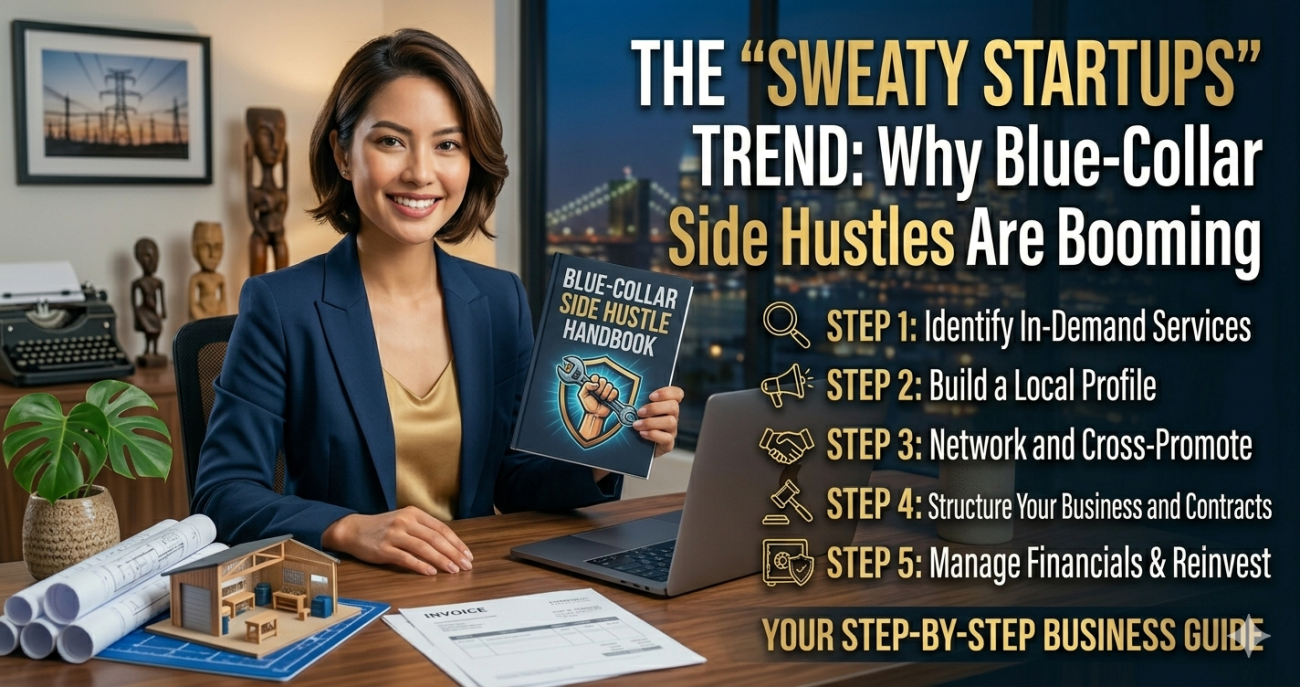
The rise of the “sweaty startups” trend is reshaping how people think about entrepreneurship. No longer confined to tech garages or Silicon Valley boardrooms, today’s fastest-growing side hustles are happening on job sites, in garages, and behind food trucks. These blue-collar ventures—built on grit, physical labor, and real-world skills—are surging in popularity, especially among Gen Z and millennials seeking financial independence outside the 9-to-5 grind.
Unlike digital-first side gigs, sweaty startups demand sweat equity. They’re not about coding apps or managing social media—they’re about fixing roofs, landscaping yards, cleaning carpets, or delivering meals. And they’re booming. With inflation squeezing household budgets and remote work blurring work-life boundaries, more people are turning to hands-on, service-based businesses that offer fast returns, low startup costs, and tangible results.
This article dives deep into why blue-collar side hustles are thriving, what’s driving the trend, and how anyone can get started—even without prior experience.
What Exactly Are “Sweaty Startups”?
The term “sweaty startups” was popularized by entrepreneur and investor Naval Ravikant to describe businesses that require physical effort, direct customer interaction, and immediate problem-solving. Think mobile car detailing, handyman services, junk removal, or local delivery gigs. These ventures are the antithesis of passive income streams—they’re active, labor-intensive, and deeply rooted in local communities.
Unlike traditional startups that chase venture capital and scalability, sweaty startups prioritize cash flow, customer retention, and word-of-mouth growth. They often start small—a single truck, a basic toolkit, or a neighborhood route—and scale through reputation and reliability.
What sets them apart is their accessibility. You don’t need a college degree, a patent, or a million-dollar idea. You need a skill, a vehicle, and the willingness to show up. That’s why they’re becoming the go-to side hustle for people from all walks of life.
Why Blue-Collar Side Hustles Are Taking Off in 2024
Several converging factors are fueling the explosive growth of blue-collar side hustles. From economic pressures to shifting cultural attitudes, the landscape has never been more favorable for hands-on entrepreneurs.
1. Economic Necessity Drives Innovation
With inflation still pinching wallets and wages struggling to keep pace, many workers are turning to side gigs just to make ends meet. According to a 2023 Bankrate survey, 39% of Americans have a side hustle, with the majority citing financial need as the primary motivator.
Blue-collar services are in constant demand. People will always need their cars washed, their lawns mowed, or their homes cleaned. These are recession-resistant services—when money is tight, people cut back on luxuries, not essentials.
2. Low Barrier to Entry
Starting a sweaty startup often requires minimal upfront investment. A pressure washer, a trailer, or a set of tools can cost less than $1,000. Compare that to launching an e-commerce store or a SaaS platform, which can require thousands in software, inventory, and marketing.
Many blue-collar side hustles can be launched in a weekend. No business plan, no pitch deck—just a clear service offering and a way to reach customers.
3. Digital Tools Level the Playing Field
Technology has made it easier than ever to market and manage a local service business. Platforms like Nextdoor, Thumbtack, and Google Business Profile allow entrepreneurs to reach customers directly in their neighborhoods.
Apps for scheduling, invoicing, and payment processing streamline operations. Even social media—especially TikTok and Instagram—has become a powerful tool for showcasing before-and-after transformations, building trust, and attracting clients.
4. Cultural Shift Toward Authenticity and Hustle
There’s a growing cultural appreciation for hard work and self-reliance. The “hustle culture” narrative—once criticized—is being redefined. Today’s side hustlers aren’t just chasing extra income; they’re building identities, gaining autonomy, and creating value in tangible ways.
Blue-collar work is being rebranded as honorable, essential, and even aspirational. Influencers and entrepreneurs are celebrating the dignity of manual labor, helping to erase outdated stigmas.
Top Blue-Collar Side Hustles Leading the Trend
Not all sweaty startups are created equal. Some services are outperforming others due to demand, scalability, and profitability. Here are the most promising blue-collar side hustles in 2024:
- Mobile Car Detailing: With busy schedules and high car ownership rates, mobile detailing services are in high demand. Entrepreneurs can operate with minimal overhead and charge premium rates for convenience.
- Junk Removal & Hauling: As people downsize, move, or declutter, junk removal services are thriving. A truck and a strong back can turn into a six-figure business.
- Handyman Services: From fixing leaky faucets to assembling furniture, handymen are always in demand. Platforms like TaskRabbit make it easy to find clients.
- Pressure Washing: Driveways, decks, and siding accumulate grime. Pressure washing is a high-margin service with repeat customers.
- Local Delivery & Errand Running: With the rise of gig economy apps, people are paying for convenience. Running errands, picking up prescriptions, or delivering groceries can be a steady side income.
- Pet Services: Dog walking, pet sitting, and mobile grooming are booming as pet ownership hits record highs.
Each of these ventures leverages existing infrastructure—your vehicle, your time, your skills—and turns them into revenue-generating assets.
How to Start Your Own Sweaty Startup
Launching a blue-collar side hustle doesn’t require a master plan. But a few strategic steps can dramatically increase your chances of success.
1. Identify a Service in Demand
Start by observing your community. What problems do people complain about? What services are always booked? Talk to neighbors, friends, and local business owners. Look for gaps in the market.
For example, if everyone in your area has old decks that need cleaning, pressure washing could be a goldmine.
2. Start Small, Validate Fast
Don’t invest heavily upfront. Test your idea with a few clients. Offer discounted rates or free trials to build testimonials and refine your process.
Use feedback to improve your service, pricing, and customer experience. Early validation is key to avoiding costly mistakes.
3. Build a Simple Brand
You don’t need a fancy logo or website—just a clear name, a professional appearance, and consistent communication. A Google Business Profile listing is essential for local visibility.
Use social media to showcase your work. Before-and-after photos, customer reviews, and behind-the-scenes clips build trust and attract leads.
4. Price for Profit
Many new entrepreneurs underprice their services. Research local rates and factor in time, materials, fuel, and taxes. Aim for at least $50–$100 per hour of labor.
Offer packages or recurring services (e.g., monthly car washes) to create predictable income.
5. Scale Strategically
Once you’re consistently booked, consider hiring help, expanding your service area, or adding complementary offerings. For example, a handyman might start offering light electrical work or smart home installations.
Reinvest profits into better tools, marketing, or insurance to protect your growing business.
Key Takeaways: Why the Sweaty Startup Trend Is Here to Stay
- Sweaty startups are booming because they meet real, ongoing needs with low startup costs and high earning potential.
- Economic pressures, digital tools, and cultural shifts are driving more people toward blue-collar side hustles.
- Top-performing services include mobile detailing, junk removal, handyman work, and pet care.
- Success comes from starting small, validating demand, and building trust through quality and consistency.
- These ventures offer more than income—they provide autonomy, skill development, and community impact.
The future of side hustles isn’t just digital. It’s dirty, hands-on, and deeply human. As long as people need their cars washed, their homes repaired, and their pets cared for, sweaty startups will keep thriving.
FAQ: Common Questions About Blue-Collar Side Hustles
What is a “sweaty startup”?
A sweaty startup is a small, service-based business that requires physical labor and direct customer interaction. Examples include car detailing, handyman services, and junk removal. These ventures prioritize cash flow and local impact over scalability and venture funding.
Do I need special skills to start a blue-collar side hustle?
Not necessarily. Many blue-collar services can be learned quickly through online tutorials, apprenticeships, or on-the-job experience. Basic mechanical aptitude, customer service skills, and reliability matter more than formal training.
How much money can I make from a sweaty startup?
Earnings vary widely based on location, service, and effort. Most entrepreneurs report $1,000–$3,000 per month in side income within the first six months. Full-time operators can earn $50,000–$100,000+ annually, especially with recurring clients and efficient operations.
The “sweaty startups” trend is more than a passing fad—it’s a fundamental shift in how people approach work, income, and entrepreneurship. In a world increasingly dominated by screens and algorithms, there’s something powerful about building a business with your hands, your time, and your reputation. Whether you’re washing cars on weekends or hauling junk after work, you’re not just earning extra cash—you’re joining a movement redefining what it means to be an entrepreneur.
