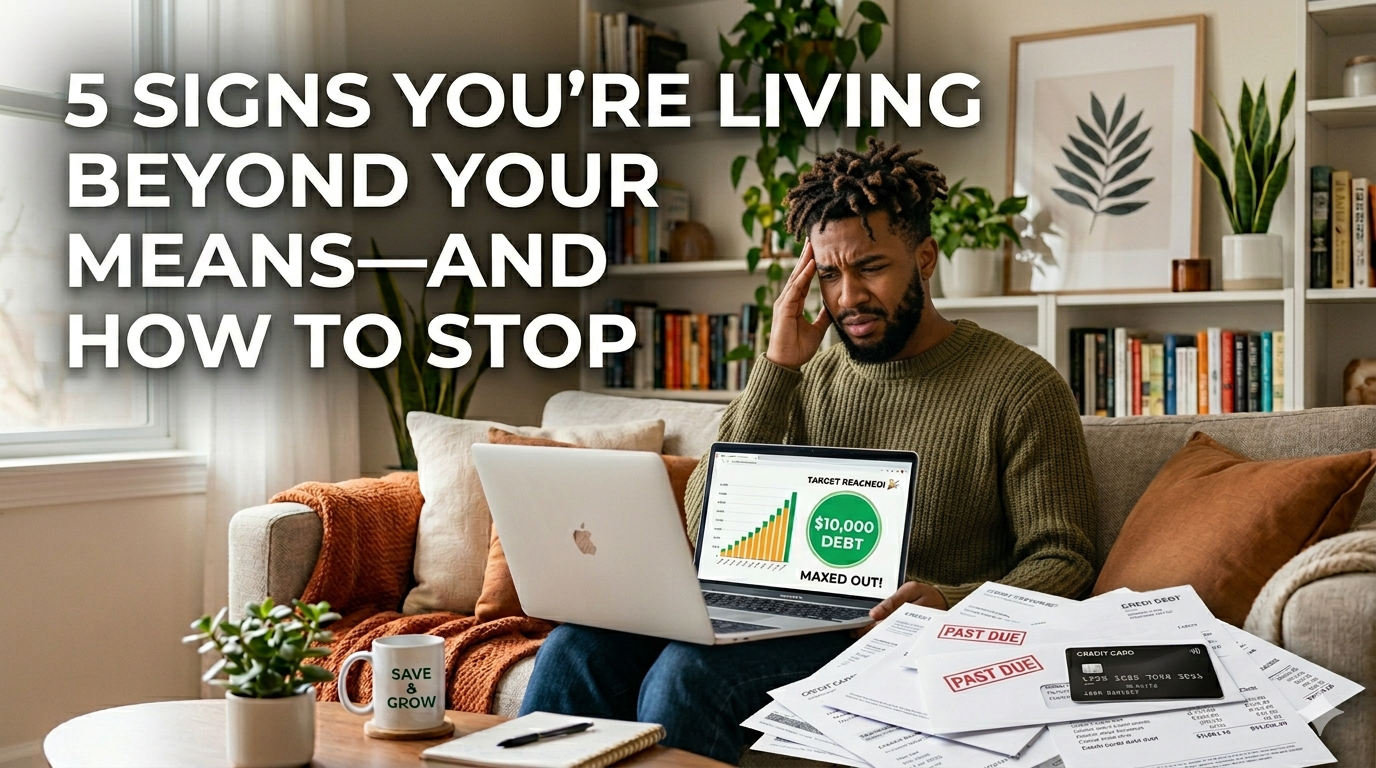
Are you constantly stressed about money, even when your paycheck hits on time? Do you rely on credit cards to cover basic expenses or feel anxious when an unexpected bill arrives? These could be clear signs you’re living beyond your means. Living beyond your means doesn’t always mean earning a low income—it happens when your spending consistently outpaces your income, creating a cycle of debt and financial insecurity. The good news? Recognizing the warning signs is the first step toward reclaiming control of your finances.
What Does “Living Beyond Your Means” Really Mean?
Living beyond your means occurs when your monthly expenses exceed your take-home income. This imbalance forces you to borrow, use savings meant for emergencies, or delay essential payments. It’s not just about luxury spending—sometimes, it’s small, recurring expenses that quietly drain your bank account. Whether it’s dining out too often, subscribing to multiple streaming services, or upgrading your phone every year, these habits add up fast.
Financial experts agree that sustainable money management starts with aligning your lifestyle to your actual income. When you spend more than you earn, you’re not just risking debt—you’re sacrificing future peace of mind.
Sign #1: You Rely on Credit Cards to Pay Bills
If you’re using credit cards to cover groceries, utilities, or rent, it’s a major red flag. While credit can be a helpful tool for building credit history or managing short-term cash flow, relying on it for everyday expenses means you’re financing your lifestyle with borrowed money.
- You only make minimum payments each month
- Your credit card balance keeps growing
- You’re unsure how long it will take to pay off your debt
To stop this cycle, create a realistic budget that accounts for all essential expenses. Cut non-essential subscriptions and focus on paying down high-interest debt first.
Sign #2: You Have Little to No Emergency Savings
An emergency fund is your financial safety net. If a car repair, medical bill, or job loss would throw you into panic mode, you’re likely living too close to the edge. Financial planners recommend saving three to six months’ worth of living expenses.
Without this buffer, any unexpected cost forces you to borrow or dip into retirement accounts—both of which come with long-term consequences. Start small: aim to save $500, then $1,000, and gradually build from there.
Sign #3: You’re Constantly Broke Before Payday
Do you find yourself counting down the days until your next paycheck, even right after getting paid? This “ paycheck-to-paycheck ” lifestyle is a classic sign of overspending. It often stems from poor budgeting, impulse purchases, or lifestyle inflation—the tendency to increase spending as income rises.
Track your spending for one month using a budgeting app or spreadsheet. You’ll likely discover hidden leaks—like daily coffee runs or impulse online shopping—that are quietly sabotaging your finances.
Sign #4: You Avoid Looking at Your Bank Statements
Avoiding your bank account or credit card statements is a psychological coping mechanism. If the thought of checking your balance causes anxiety, it’s time to face the numbers head-on. Ignoring your finances won’t make the problem disappear—it usually makes it worse.
Set a weekly “money check-in” to review transactions, update your budget, and assess progress toward financial goals. Transparency builds control.
Sign #5: You Feel Stressed or Ashamed About Money
Emotional distress around money—guilt, shame, or constant worry—is a powerful indicator that your spending habits are unsustainable. Money stress affects mental health, relationships, and overall well-being.
If you lie to your partner about purchases, hide receipts, or feel embarrassed about your financial situation, it’s time to take action. Financial health is just as important as physical health.
How to Stop Living Beyond Your Means
Breaking free from overspending starts with awareness and intentional action. Here’s a practical plan to get back on track:
1. Create a Realistic Budget
Use the 50/30/20 rule as a guide: 50% for needs, 30% for wants, and 20% for savings and debt repayment. Adjust percentages based on your income and goals.
2. Track Every Expense
For 30 days, record every dollar spent. Apps like Mint, YNAB, or even a simple notebook can help. Awareness is the foundation of change.
3. Cut Non-Essential Spending
Cancel unused subscriptions, cook at home more often, and pause big purchases. Redirect that money toward debt or savings.
4. Build an Emergency Fund
Start with $500, then aim for three months of expenses. Keep this money in a separate, easily accessible savings account.
5. Increase Your Income
If cutting expenses isn’t enough, explore side hustles, freelance work, or selling unused items. Extra income can accelerate debt payoff and build savings faster.
Key Takeaways
- Living beyond your means happens when spending exceeds income, leading to debt and stress.
- Common signs include relying on credit, lacking savings, and feeling anxious about money.
- Breaking the cycle requires budgeting, tracking expenses, and building financial resilience.
- Small, consistent changes lead to long-term financial freedom.
FAQ
How do I know if I’m truly living beyond my means?
If you’re using credit to cover basic expenses, have no emergency savings, or feel constant financial stress, you’re likely spending more than you earn. Review your bank statements and compare your monthly income to your total expenses.
Can I recover from living beyond my means?
Absolutely. Many people turn their finances around by creating a budget, cutting unnecessary spending, and building an emergency fund. It takes discipline, but financial recovery is possible at any income level.
What’s the fastest way to stop overspending?
The fastest way is to pause all non-essential purchases for 30 days. Use cash or a debit card only, track every expense, and redirect saved money toward debt or savings. This “spending freeze” creates immediate awareness and control.
