
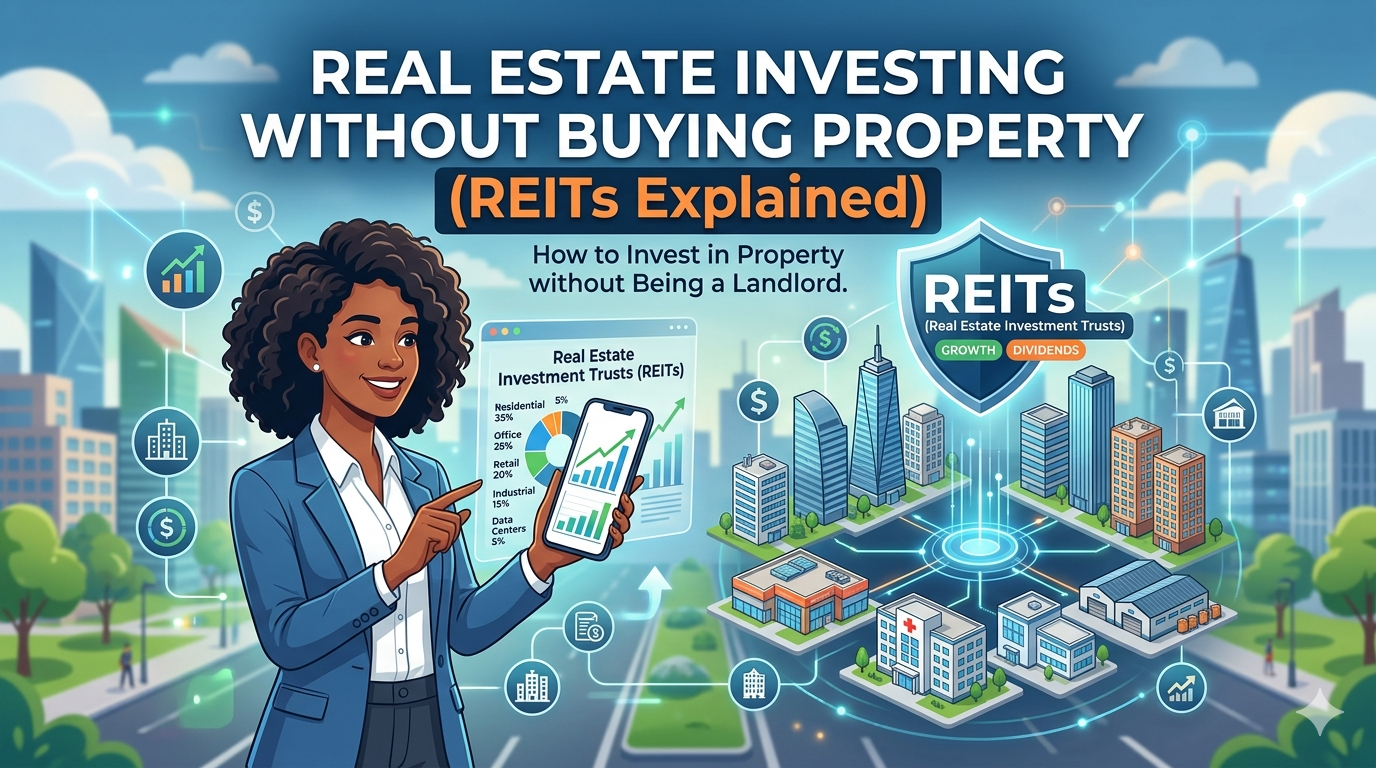
Want to profit from real estate without dealing with tenants, mortgages, or maintenance headaches? Real estate investing without buying property is not only possible—it’s increasingly popular. The solution? Real Estate Investment Trusts, or REITs. These publicly traded companies let you invest in income-generating real estate through the stock market, offering dividends, liquidity, and diversification—all without owning a single brick or tile.
What Are REITs and How Do They Work?
A REIT is a company that owns, operates, or finances income-producing real estate across a range of property sectors. Think shopping malls, apartment buildings, office towers, warehouses, and even cell towers. To qualify as a REIT, a company must meet strict IRS requirements, including distributing at least 90% of its taxable income to shareholders as dividends.
Because of this structure, REITs offer investors a steady stream of income, often with higher yields than traditional stocks. They trade on major exchanges like the NYSE, making them as easy to buy and sell as any other stock. This liquidity is a major advantage over physical real estate, which can take months to sell.
Types of REITs: Equity, Mortgage, and Hybrid
Not all REITs are the same. They fall into three main categories:
- Equity REITs: Own and manage physical properties. They generate revenue primarily through rent. Examples include apartment REITs like AvalonBay and retail REITs like Simon Property Group.
- Mortgage REITs (mREITs): Provide financing for real estate by purchasing or originating mortgages and mortgage-backed securities. They earn income from the interest on these loans. These tend to be more sensitive to interest rate changes.
- Hybrid REITs: Combine strategies of both equity and mortgage REITs, offering a balanced approach to real estate investing without buying property directly.
Why Invest in REITs Instead of Physical Property?
Traditional real estate investing requires significant capital, time, and expertise. You need to secure financing, manage properties, handle repairs, and deal with vacancies. REITs eliminate most of these barriers.
Here’s why investors are turning to REITs:
- Low Barrier to Entry: Start with as little as the price of one share—often under $50.
- Passive Income: Enjoy regular dividends without lifting a finger.
- Diversification: Gain exposure to multiple properties and sectors in one investment.
- Liquidity: Buy and sell shares instantly during market hours.
- Professional Management: REITs are run by experienced real estate professionals.
REIT Performance and Market Trends
Historically, REITs have delivered competitive long-term returns. According to the National Association of Real Estate Investment Trusts (Nareit), U.S. equity REITs have averaged annual returns of around 9–10% over the past 20 years—outpacing inflation and often matching or exceeding the S&P 500.
During economic recoveries, REITs tend to perform well as occupancy rates rise and rental income grows. However, they can be sensitive to interest rate hikes, as higher rates increase borrowing costs and make bonds more attractive relative to dividend-paying stocks.
Recent trends show strong growth in industrial and data center REITs, driven by e-commerce and cloud computing. Residential and healthcare REITs also remain resilient, supported by demographic shifts like aging populations and urbanization.
How to Start Investing in REITs
Getting started is simple. You don’t need a real estate license or a down payment. Here’s how:
- Open a Brokerage Account: Use platforms like Fidelity, Vanguard, or Robinhood.
- Research REITs: Look for strong management, solid balance sheets, and consistent dividend history.
- Diversify: Consider a mix of sectors—retail, residential, industrial, healthcare.
- Consider REIT ETFs or Mutual Funds: These offer instant diversification. Popular options include Vanguard Real Estate ETF (VNQ) and Schwab U.S. REIT ETF (SCHH).
Many investors use REITs as a core part of their income-generating portfolio, especially in retirement planning. Their high dividend yields make them attractive for those seeking passive cash flow.
Risks and Considerations
While REITs offer many benefits, they’re not risk-free. Key risks include:
- Interest Rate Sensitivity: Rising rates can reduce REIT valuations.
- Market Volatility: Like stocks, REIT prices fluctuate daily.
- Sector-Specific Risks: A retail REIT may suffer during an economic downturn, while a healthcare REIT could face regulatory changes.
- Dividend Cuts: If a REIT’s income drops, it may reduce or suspend payouts.
It’s important to assess your risk tolerance and investment goals before diving in. Diversification across REIT types and geographies can help mitigate some of these risks.
Key Takeaways
- REITs allow you to invest in real estate without buying property, offering dividends, liquidity, and diversification.
- They must pay out 90% of taxable income as dividends, making them income-focused investments.
- Equity, mortgage, and hybrid REITs serve different roles in a portfolio.
- REITs are accessible through brokerage accounts, ETFs, or mutual funds.
- While generally stable, they carry risks like interest rate sensitivity and market volatility.
FAQ
Can I really make money with REITs without owning property?
Yes. REITs generate income from rent, leases, and property appreciation. As a shareholder, you earn dividends and can benefit from share price growth—all without managing any physical assets.
Are REIT dividends taxable?
Most REIT dividends are taxed as ordinary income, not at the lower qualified dividend rate. However, a portion may be classified as return of capital or capital gains, depending on the REIT’s earnings. Consult a tax advisor for personalized advice.
Are REITs safe during a recession?
It depends on the sector. Residential and healthcare REITs often hold up well, while retail and office REITs may struggle. Diversification and strong management are key to weathering economic downturns.
