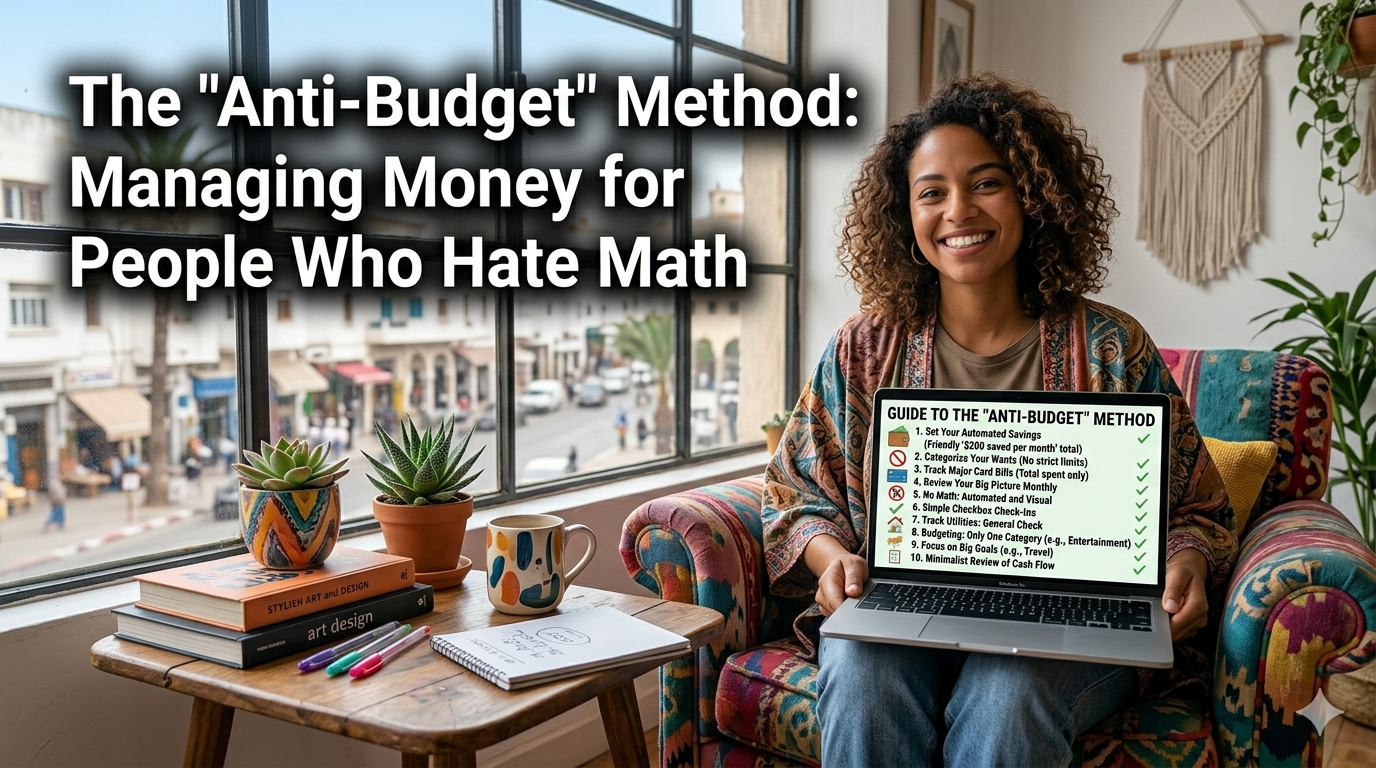
Do you dread opening your bank app because numbers make your eyes glaze over? You’re not alone. For people who hate math, traditional budgeting feels like a punishment—spreadsheets, percentages, and endless calculations that drain all joy from money management. The good news? There’s a better way. Enter the “Anti-Budget” Method: a simple, math-light approach to managing your money without spreadsheets, formulas, or guilt.
This method flips the script on conventional budgeting. Instead of tracking every dollar, you focus on intuitive rules and automated systems that keep your finances on track—without the mental math. Whether you’re bad with numbers, overwhelmed by financial jargon, or just tired of failing at budgets, the Anti-Budget Method offers a refreshing alternative.
Why Traditional Budgeting Fails (Especially for Math Haters)
Most budgeting systems assume you enjoy categorizing expenses, calculating ratios, and adjusting line items every month. But if math isn’t your thing, this process feels like homework—and it’s no surprise so many people give up.
Traditional budgets often fail because they’re:
- Too detailed – Tracking every coffee and Uber ride becomes exhausting.
- Too rigid – Life isn’t predictable, and neither should your spending be.
- Too math-heavy – Percentages, savings goals, and expense ratios trigger anxiety.
The Anti-Budget Method removes these pain points. It’s designed for real people with real lives—people who want financial peace without the number-crunching.
How the Anti-Budget Method Works (No Calculator Needed)
The core idea is simple: automate, simplify, and trust the system. Instead of micromanaging your money, you set up a few smart rules and let automation do the heavy lifting. Here’s how it works:
1. Pay Yourself First (Automatically)
Before you spend a dime, move a portion of your income into savings or investments. Set up automatic transfers on payday—no thinking, no math. Even $20 a week adds up over time.
2. Use the “Spend from Cash” Rule
Withdraw a fixed amount of cash each week for discretionary spending—groceries, dining out, entertainment. When the cash is gone, spending stops. No apps, no tracking, no guilt.
3. Ignore the Rest
Once your bills are paid and savings are automated, the money left in your checking account? That’s your “fun money.” Spend it freely. No categories, no limits, no spreadsheets.
This approach removes the need for constant monitoring. You’re not budgeting—you’re setting boundaries and trusting the process.
Real-Life Benefits of the Anti-Budget Method
People who’ve switched to the Anti-Budget Method report surprising benefits—beyond just avoiding math.
- Less stress – No more monthly budget reviews or guilt over “overspending.”
- More freedom – You can enjoy your money without obsessing over every purchase.
- Better savings – Automating savings means you save consistently, even if you forget.
- Improved relationships – Couples argue less about money when there’s no rigid budget to enforce.
One user shared: “I used to panic every time I checked my account. Now, I know my bills are covered, my savings are growing, and I can enjoy my weekend without worrying about a budget spreadsheet.”
Who Should Try the Anti-Budget Method?
This method isn’t for everyone—but it’s perfect for:
- People who’ve failed at traditional budgeting.
- Those who find financial planning overwhelming or boring.
- Individuals who want simplicity and autonomy with their money.
- Anyone tired of feeling guilty about spending.
If you’ve ever said, “I just don’t get money,” this method might be your lifeline. It’s not about being bad with finances—it’s about finding a system that fits your brain, not the other way around.
Getting Started: Your 3-Step Anti-Budget Setup
Ready to ditch the math and take control? Here’s how to launch your Anti-Budget in three easy steps:
- Automate your essentials – Set up auto-pay for bills and auto-transfer for savings. Aim for 10–20% of your income going straight to savings.
- Withdraw weekly cash – Decide how much you can comfortably spend each week (e.g., $100). Withdraw it and use only that cash for variable expenses.
- Let the rest be free – Whatever remains in your checking account after bills and cash withdrawal? That’s your spending money. No rules, no tracking.
That’s it. No apps, no formulas, no stress. Just simple, sustainable money management.
Key Takeaways
- The Anti-Budget Method is ideal for people who hate math and traditional budgeting.
- It relies on automation, cash envelopes, and intuitive spending—not spreadsheets.
- You save automatically, spend freely within limits, and reduce financial anxiety.
- It’s not about perfection—it’s about creating a system that actually works for you.
FAQ
Is the Anti-Budget Method good for people with debt?
Yes—especially if debt feels overwhelming. By automating payments and reducing spending stress, you’re more likely to stick to a repayment plan. Just make sure your auto-pay includes minimum debt payments.
What if I run out of cash before the week ends?
That’s okay. It’s a signal to adjust your weekly amount next time. The goal isn’t perfection—it’s awareness. You’ll naturally spend less when you see the cash disappearing.
Can I still save for big goals like a vacation or home?
Absolutely. Create a separate savings account for big goals and automate small transfers into it each month. No math needed—just consistency.
The Anti-Budget Method isn’t about ignoring money—it’s about managing it in a way that respects your time, energy, and aversion to math. If you’ve ever felt defeated by budgeting, this could be the fresh start you’ve been waiting for.
