Are you tired of second-guessing the market and losing sleep over when to invest? Dollar-cost averaging offers a simple, proven strategy to grow your wealth without the emotional rollercoaster. Instead of trying to time the perfect entry point, you invest a fixed amount regularly—regardless of market conditions. This disciplined approach smooths out volatility, reduces risk, and builds long-term confidence in your financial journey.
What Is Dollar-Cost Averaging?
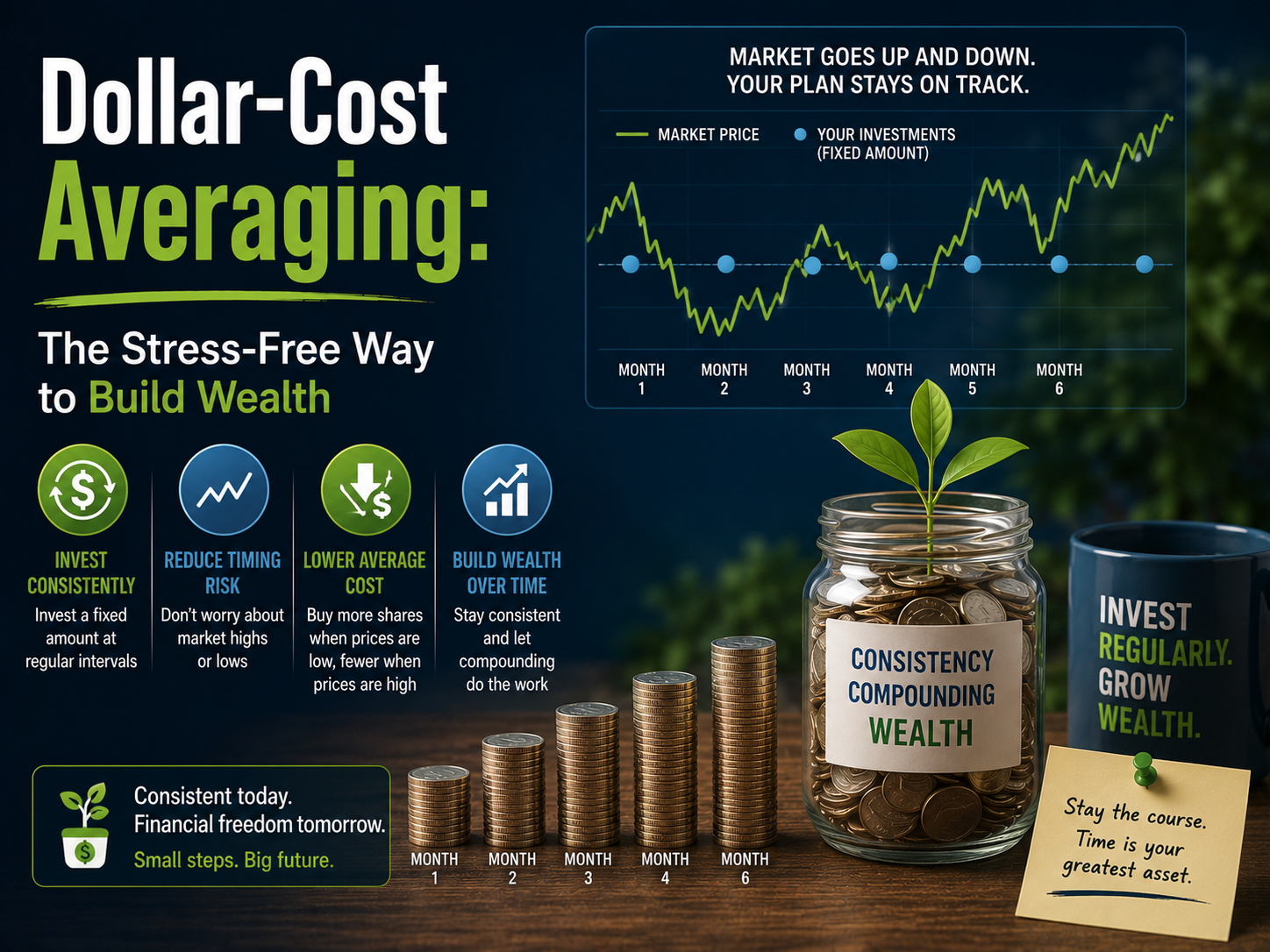
Dollar-cost averaging (DCA) is an investment strategy where you contribute a consistent amount of money into a portfolio at regular intervals—such as monthly or bi-weekly—no matter how the market is performing. Whether stocks are up, down, or sideways, you stick to your plan. Over time, this method helps you buy more shares when prices are low and fewer when they’re high, averaging out your cost per share.
This technique is especially valuable for everyday investors who lack the time, expertise, or nerve to monitor markets daily. It removes the pressure of making perfect timing decisions and replaces it with consistency and patience.
How Dollar-Cost Averaging Works in Practice
Imagine you invest $500 every month into an S&P 500 index fund. In January, the market dips, and your $500 buys 10 shares at $50 each. In February, the market rebounds, and your $500 buys only 8 shares at $62.50. Despite the fluctuation, you’re steadily accumulating assets without needing to predict the next move.
Over months and years, this pattern smooths out purchase prices. You’re not chasing peaks or panicking at troughs—you’re simply building wealth through steady, automatic contributions.
Why Dollar-Cost Averaging Reduces Investment Stress
One of the biggest hurdles to successful investing is emotion. Fear and greed often lead to poor decisions—selling low during crashes or buying high during euphoria. DCA acts as a behavioral safeguard, automating your investments so you stay the course.
- Eliminates market timing anxiety: No need to guess when the market will bottom out.
- Encourages consistency: Regular investments build discipline and compound returns.
- Reduces emotional trading: Automated contributions prevent impulsive decisions.
- Ideal for beginners: Simple to implement and requires minimal financial knowledge.
By removing the psychological burden, DCA helps you focus on long-term goals—like retirement, a home, or financial independence—without getting derailed by short-term noise.
Dollar-Cost Averaging vs. Lump-Sum Investing
You might wonder: Is it better to invest a large sum all at once or spread it out? Research shows that lump-sum investing historically outperforms DCA about two-thirds of the time—but only if you can stomach the risk.
However, most people aren’t comfortable investing a windfall immediately. Market downturns shortly after a big purchase can trigger regret and hesitation. DCA offers a middle ground: it captures upside potential while minimizing the sting of a sudden drop.
For those receiving steady income—like salaries—DCA is a natural fit. It aligns with cash flow and turns saving into a habit, not a chore.
Best Practices for Successful Dollar-Cost Averaging
To get the most out of DCA, follow these proven guidelines:
- Choose low-cost index funds or ETFs: Minimize fees to maximize long-term growth.
- Automate your investments: Set up recurring transfers to ensure consistency.
- Stay invested during downturns: Volatility is normal—stick to your plan.
- Review annually: Rebalance if needed, but avoid frequent changes.
- Increase contributions over time: As your income grows, so should your investments.
Remember, DCA isn’t about beating the market—it’s about participating in it steadily and sustainably.
Real-World Benefits of Dollar-Cost Averaging
Beyond reducing stress, DCA offers tangible financial advantages. It lowers your average cost per share over time, especially in volatile markets. It also fosters financial discipline, turning investing into a routine rather than a reaction.
For example, during the 2020 market crash, investors using DCA kept buying as prices fell. When the market rebounded in 2021, those who stayed the course saw significant gains. Panic sellers, on the other hand, locked in losses.
DCA doesn’t guarantee profits, but it significantly improves your odds of long-term success by keeping you invested—through thick and thin.
Key Takeaways
- Dollar-cost averaging is a stress-free, disciplined way to build wealth over time.
- It removes the need to time the market and reduces emotional decision-making.
- By investing fixed amounts regularly, you buy more shares when prices are low and fewer when high.
- Automating contributions and choosing low-cost funds enhances effectiveness.
- DCA is ideal for long-term goals like retirement, education, or financial freedom.
FAQ
Is dollar-cost averaging only for beginners?
No. While DCA is beginner-friendly, it’s also used by experienced investors and financial advisors. It’s a core strategy in retirement accounts like 401(k)s and IRAs, where contributions happen automatically with each paycheck.
Can I use dollar-cost averaging with individual stocks?
Yes, but it’s riskier than using diversified funds. Individual stocks can lose value permanently, whereas broad market funds tend to recover over time. For most investors, index funds or ETFs are safer choices for DCA.
What if the market keeps going up? Won’t I miss out?
While lump-sum investing may outperform DCA in rising markets, DCA protects you from downside risk. Most investors value peace of mind over marginal gains. Over decades, consistency often beats timing.
